
Latin America Cybersecurity Overview, October 2026
More ransomware, fraud, and regulation shaped October in Latin America, with Argentina, Chile, Brazil, and Colombia in focus.
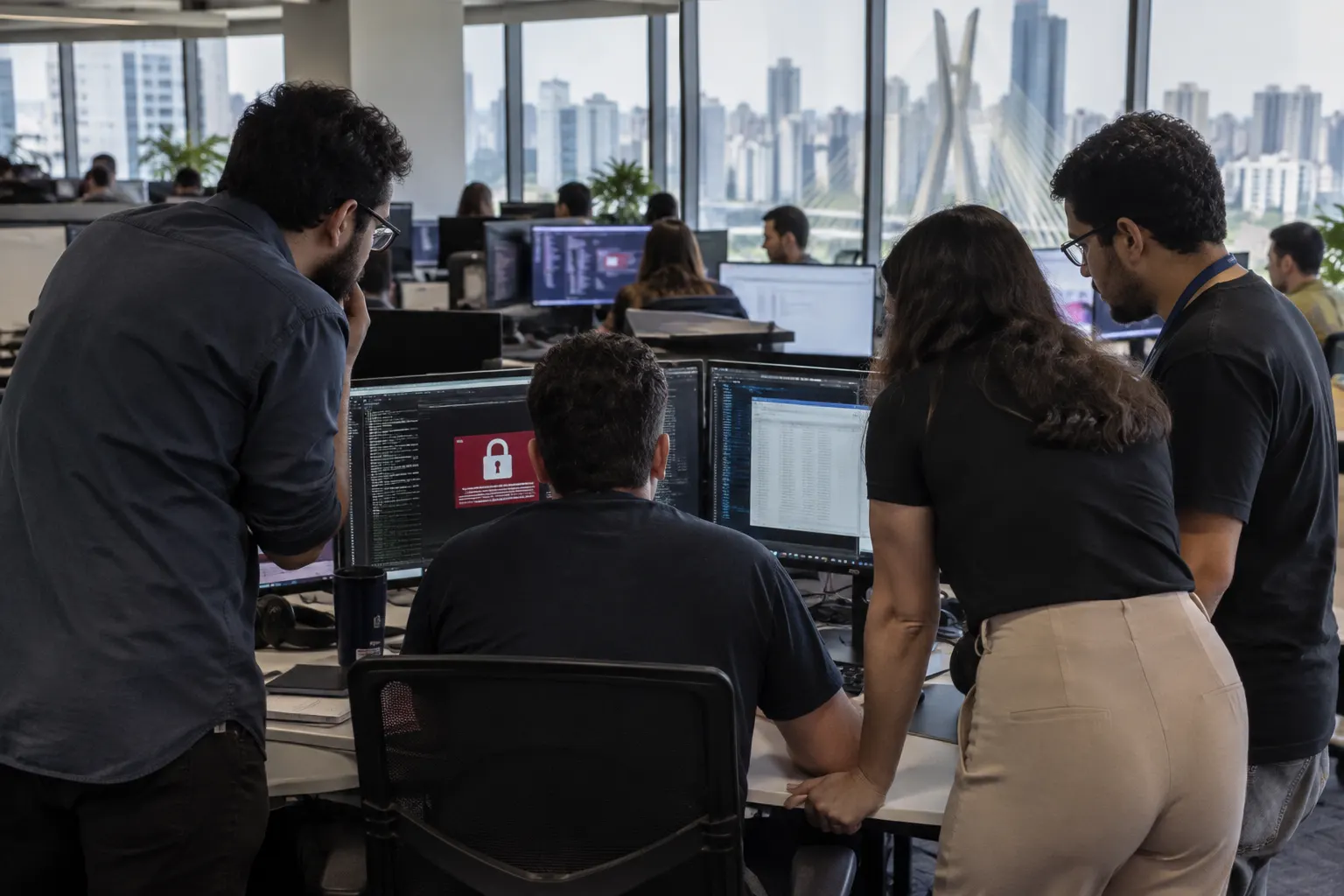
Key findings
- Argentina accounted for the month’s most visible operational incident, with ransomware against municipalities and an AI campaign against health that compromised at least 15 entities.
- Brazil had the highest regulatory density and a strong enforcement signal, with ANPD sanctions, LGPD adjustments, and more AI governance.
- Chile kept the focus on critical infrastructure, OT continuity, and postponement of the data protection law until 2027.
- AI-driven fraud became cross-regional: fake investment schemes, sexual deepfakes, vishing, and voice cloning appeared in several countries.
- Ransomware and extortion rose from the previous month, but most cases could not be classified precisely in the material.
- Critical vulnerabilities in PHP, Atlassian, Collabora, and Citrix showed rapid exploitation and reinforced the urgency of patching across the region.
- The drop in regulatory activity versus September did not mean less pressure, but rather a shift toward more dispersed incidents that were harder to classify.
Monthly reference modules
These modules are filled automatically with verified dated facts within the period. Each one states its basis and counting criterion, so the figures reconcile across modules. They are the recurring month-to-month readout; the analysis that follows expands on the cases without repeating this summary.
Indicator window: 851 dated facts in October 2026 · 116 from previous months (comparative frame, not monthly volume) · 33 without confirmed date (excluded from the indicators). Facts from previous months are used only as a comparative frame in the analysis, never as volume for this period.
Monthly executive summary
October 2026 left a regional picture of elevated risk, with 847 verified incidents across Latin America and a heavier mix of intrusion, extortion, fraud, and regulatory change. The month was shaped by two increasingly overlapping vectors: operational attacks on essential services and the malicious use of artificial intelligence for fraud, impersonation, and influence. The clearest signal was that the largest confirmed incident hit health care and municipal governments in Argentina, while Chile, Brazil, Colombia, and Mexico accounted for the period’s most sensitive developments.
The Argentine case involving Program Consultores became the month’s most visible episode because of its operational impact. Coverage confirmed ransomware that knocked systems used by municipalities in several provinces offline and, according to a local source, reached about 250 municipalities. At the same time, CrowdStrike reported a separate campaign, also in Argentina, in which AI agents compromised at least 15 health entities and exfiltrated credentials and medical records from at least one victim. These were distinct incidents, but together they explain why the public sector and health care were among the most exposed areas during the period.
Extortion also kept rising in critical infrastructure, especially in Brazil and Chile. In Brazil, Hospital Albert Einstein confirmed unauthorized access to patient data and notified the ANPD and the Federal Police, while the Insidioso operation advanced in a ransomware case involving the extraction of sensitive data. In Chile, the Huatacondo solar park and its storage system remained offline, keeping the debate over OT resilience alive, and Entel Digital’s analysis again placed transportation, logistics, energy, water, sanitation, and health care among the sectors under the greatest pressure.
The fraud layer was just as intense, although less dominant than in September. Argentina produced several of the clearest cases, including AI-driven investment scams, sexual deepfakes in schools, bank fraud, and organized digital fraud using fake domains. In Colombia, Shadow Parasite showed the industrialization of phishing with 288 fake domains and 47 impersonated brands. In Bolivia, police warned of a rise of up to 300% in digital scams and described voice cloning, fake links, and schemes on WhatsApp and Telegram as common tactics.
Regulation had a smaller role than in the previous month, but it continued to shape the regional agenda. Chile moved ahead with delaying its data protection law, Brazil maintained an active stream of rules, sanctions, guidance, sandboxes, and governance adjustments, and Guatemala again pushed its cybersecurity bill in Congress. The month also delivered a clear sign of institutional maturity, as Brazil’s ANPD sanctioned Feira de Santana for exposure of sensitive medical data and reinforced a supervisory line that no longer stops at warnings.
Regional snapshot for the month
The region came under heavy pressure because verified incidents were not confined to a single type of attack or a single country. There was ransomware with operational impact, extortion built on stolen data, industrial-scale digital fraud, AI-driven influence campaigns, exposure of personal data, and regulatory decisions trying to catch up with a pace of change that had already outrun them. Regional operational risk remains high because several of those lines converge on the same attack surface, health care, local government, financial services, telecom, and energy.
October points to high risk. That is not because of a single spike in volume, but because the material shows a mix of reach, technical variety, and systemic exposure. Ransomware kept moving in through credentials, remote access, and third-party chains. Fraud leaned harder on social engineering and AI-based impersonation. Regulation responded with more enforcement, more obligations, and more oversight of data and digital platforms. The dominant signal was not one malware family, but the normalization of mixed attacks, where a legally relevant incident can begin as a scam, continue as account compromise, and end in extortion or data theft.
Brazil carried the greatest structural weight in the month because of its regulatory density and the presence of cases in health care, energy, the public sector, and finance. ANPD again showed sanctioning power, while the regulatory ecosystem kept adjusting to Open Finance, LGPD, artificial intelligence, and child protection in digital environments. That level of activity does not remove risk, but it does show an institutional market that already treats cybersecurity as a matter of compliance, governance, and operational continuity, not just technical defense.
Argentina drew the most operational attention during the period because of the collision between ransomware, health care, and digital fraud. The combination of municipalities taken offline, compromised hospitals, AI-enabled scams, and deepfake sexual abuse cases shows an environment where the line between cyber incident, economic crime, and reputational harm has become porous. In threat terms, that means the country has to be read not only as a victim market, but also as a testing ground for identity abuse tactics, fraudulent monetization, and extortion pressure.
Chile, Colombia, and Bolivia added different but converging signals. Chile centered the debate on critical infrastructure, energy continuity, and connectivity, along with a regulatory agenda moving toward 2027. Colombia showed a combination of technical exposure, large-scale phishing, and industrialized digital fraud. Bolivia, meanwhile, offered a warning that is useful for the region, fraud no longer depends only on links or SMS, but on cloned voices, emotional manipulation, and the automation of persuasion.
Period indicators
| Indicator | October 2026 | Previous month | Change |
|---|---|---|---|
| Verified facts in the period | 847 | 851 | -4 |
| Indicator time window | 851 facts dated October 2026 · 116 from prior months (comparative frame, not monthly volume) · 33 without confirmed date (excluded from indicators) | Same | No change |
| Unclassified incidents (breaches or outages) | 97 | 61 | +36 |
| Cases with ransomware or extortion as the primary focus | 72 | 40 | +32 |
| Confirmed asset encryption | 15 | Not provided | N/A |
| Exfiltration without encryption (simple extortion) | 5 | Not provided | N/A |
| Leak site mention only | 1 | Not provided | N/A |
| Classification not determinable from the material | 51 | Not provided | N/A |
| Documented fraud or phishing cases | 128 | 190 | -62 |
| Documented regulatory moves | 150 | 322 | -172 |
| Critical CVEs mentioned | 14 | 2 | +12 |
| Sectors with at least one documented fact | 8 | 8 | No change |
| Dominant threat of the month | Unclassified (339 of 847 facts) | Regulation (322 of 851 facts) | Shift in focus |
| Facts with direct source confirmation | 73% | Not provided | N/A |
| Aggregated telemetry figures excluded from volume | 4 (aggregated attempts or blocks: these are not incidents with confirmed impact) | Not provided | N/A |
Reading the indicators
The table points to a month that was less regulatory than September, but heavier in operational security and incident response. The drop in regulatory moves does not signal a loosening, but rather a shift in focus, fewer visible initiatives in the coverage and more messy events with incomplete classification. The rise in ransomware and unclassified incidents suggests a more opaque threat market, where news coverage and technical advisories still do not close every attribution gap.
Relevant incidents
Ransomware at Program Consultores and municipal service outages in Argentina
The month’s most visible case was the attack on Program Consultores S.A., operator of the PGM platform, which took down systems used by municipalities across several Argentine provinces. Coverage by Diario Popular confirmed disruptions to procedures, fee collection, and digital services, while La Voz del Interior widened the scope and said about 250 municipalities were affected nationwide. The company said malicious software encrypted files and left servers inoperable, and denied any theft or leak of databases.
The significance of the case goes beyond the technical impact. The incident hit a shared infrastructure layer, which amplifies cascading damage when reliance on centralized software is high. In municipalities, the practical effect is twofold, citizen service slows down and administrative traceability degrades, which becomes especially sensitive when a ransom demand is also in play. Local coverage showed that the debate quickly turned to outsourced technology models and the contractual resilience of vendors.
The reporting trail also left an important nuance on attribution and scope. TiempoSur said more than 250 municipalities and communes across 11 provinces were affected, but noted that the figure came from local coverage and not an independent audit. For a regional reading, the key point is different: ransomware is no longer hitting only large companies or central state entities, but also platforms that support distributed public operations. That forces a review of dependency inventories, continuity contracts, and recovery capacity by client or jurisdiction.
AI-agent campaign against Argentina’s health sector
CrowdStrike said on October 30 that between May and August 2026 it documented a campaign in which a Spanish-speaking operator compromised at least 15 Argentine health entities. The vendor said the attacker used a dual-agent architecture built on Claude Code, with a Supervisor agent choosing the next task and an Executor agent carrying it out. According to the same source, credentials and medical records were exfiltrated from at least one victim.
The piece matters because it does not describe AI as a simple aid for writing phishing lures or automating scripts, but as part of the attack’s decision and execution loop. That shift changes the risk picture for hospitals and clinics, it is no longer just about blocking messages or attachments, but about anticipating more adaptive intrusion chains. IT Brief Asia reinforced that point by noting that the agents made decisions and executed commands during the intrusion, which sets this campaign apart from superficial uses of AI.
The coverage did not publicly identify the compromised entities, and that limits any inference about geographic or institutional exposure. Even so, the fact that the material is tied to Argentina’s health sector and mentions exfiltration of credentials and medical records makes it a reference case for the month. The potential impact is clear, loss of clinical confidentiality, regulatory exposure, and a larger attack surface for follow-on fraud, because credentials and medical data can feed extortion, impersonation, or social engineering.
Hospital Albert Einstein and Brazil’s Federal Police response
Hospital Israelita Albert Einstein confirmed that it suffered a cyberattack with unauthorized access to, and retrieval of, part of its patient database. The institution said the data could include name, CPF, date of birth, medical prescriptions, and test results, and it notified ANPD and the Federal Police. It also said patient care was not affected.
The Federal Police opened Operation Insidioso to investigate a group suspected of ransomware attacks. Metrópoles reported that the investigation began after a notice from an institution that said it had been the victim of an attack with sensitive data extraction in July. Correio Braziliense added that systems and electronic records continued operating normally, pointing to an incident with data impact, but not necessarily broad operational downtime.
That contrast between clinical continuity and information exposure is key to understanding the Brazilian pattern this month. Damage does not always appear as systems being shut down. Sometimes it shows up as data loss, notification obligations, reputational pressure, and possible extortion. The Einstein case also fits the market’s broader shift, data exfiltration before encryption, or without encryption, is now part of the usual monetization chain.
Huatacondo and OT resilience in Chile
The Huatacondo solar park and its battery storage system remained disconnected from the National Electric System, with 0% availability according to the daily report from the National Electric Coordinator on October 27. The same record kept the cause reported on August 27, "cyberattack on the Huatacondo facilities." Diario Financiero added that the Coordinator also linked that alleged cyberattack to the disconnection of transformer TR1 220/23 kV at the Santa Rita substation.
The coverage did not provide technical details or attribution, and that gap calls for caution. But the fact that the disconnection lasted for two months makes the case important as a signal. What matters is not only whether there was a successful attack, but that the infrastructure remained unavailable for an extended period, with effects on public debate over critical energy assets, supervisory control, and remote operations. SolarQuarter and Energía Futura also noted that the attackers’ identity and the reconnection date had not been disclosed.
Chile appears here as a country where industrial cybersecurity is no longer a theoretical debate. An Entel Digital note cited by G5 Noticias placed transport and logistics, energy, fuels, water, and sanitation among the verticals most hit by ransomware in critical infrastructure. The Huatacondo case fits into a broader discussion about OT, power continuity, and cross-dependence with telecommunications.
Shadow Parasite and industrialized digital fraud in Colombia
An investigation attributed to Lumu and published by Impacto TIC identified 288 fake domains used to impersonate 47 brands in Colombia, including financial institutions, digital wallets, payment collectors, and public service companies. Semana added that the operation started with 51 domains and later grew to 288, with 246 IP addresses and 29 autonomous systems, plus seven linked payment gateways. The method included capturing passwords, authentication codes, and card data through fake portals.
The value of the case lies in its scale and operational discipline. This is not an isolated site, but a fraud infrastructure with the ability to rotate domains, divert traffic, and sustain brand impersonation campaigns. That matches what the region has seen for months, fraud has become professionalized and now works like a service, with levels of automation that make it harder to distinguish a one-off campaign from a stable monetization platform.
Shadow Parasite also helps clarify the difference between exposure and compromise. ColCERT issued an alert about 8,699 PHP services accessible from the internet, but said that did not confirm a successful attack. Shadow Parasite, by contrast, describes direct victims of deception. The distinction matters because in Colombia the problem appears to be split between exposed attack surface and impersonation fraud already deployed at scale.
AI scams and digital violence in Argentina
Argentina was the country where fraud, identity, and nontraditional digital harm overlapped most. ESET, through several reports, analyzed an investment scam campaign that combined digital ads, phone-based social engineering, media and public-figure impersonation, and manipulated videos or statements made with artificial intelligence. The coverage even mentioned a supposed platform tied to VT Markets and deepfakes linked to President Javier Milei and a fictitious investment project.
The other side of the same dynamic was more school-based and more serious from a social standpoint. In Lomas de Zamora, students were reported for creating and spreading fake sexual images of classmates, and the courts analyzed phones to reconstruct the creation, circulation, and possible sale of the content. La Nación reported that the case was assigned to a juvenile prosecutor’s office for the alleged crime of manufacturing and distributing sexual images of minors, while Chequeado noted that Argentina still lacks a specific criminal offense for sexual deepfakes.
The combined reading is uncomfortable but clear. AI is already being used both to steal money and to fabricate reputational and sexual harm in school settings. This is not one crime type, but a toolbox that enables financial fraud, extortion, public humiliation, and peer coercion. For security teams, that shifts the discussion from pure technical controls to interdisciplinary response with legal, HR, compliance, and child protection.
OpenAI and covert influence with a regional focus
OpenAI said on October 4 and October 8 that it suspended ChatGPT accounts originating in Russia for using them in covert influence operations aimed at Latin American countries, with a particular focus on Argentina and Bolivia. The company said it detected and blocked two operations that used the tool to draft and update internal reports, and that one of the networks sought to interfere in regional politics. CyberScoop added that false journalist and think tank identities were also involved.
The key point in this case is not just the origin of the accounts, but the regional tailoring of the content. The operation did not stop at generic campaigns. It tried to plant narratives useful in specific political contexts, with references to Argentina and Bolivia. OpenAI also mentioned false content spread in Bolivia at the end of May 2026, which shows a longer timeline than the October reporting window alone.
From a regional cybersecurity perspective, these operations do not replace phishing or ransomware. They complement them. They can erode public trust, amplify rumors, and facilitate fraud, especially when audiences are already exposed to deepfakes, fake accounts, and voice cloning. For October, the signal is that AI not only speeds up attacks, it also speeds up the construction of fake credibility environments.
Active Threats and Campaigns
Ransomware and Extortion
The month showed a clear rise in ransomware and extortion pressure, although full classification remained incomplete in many cases. Of the 72 cases in which ransomware or extortion was the primary focus, only 15 had confirmed asset encryption, 5 involved exfiltration without encryption, 1 was only mentioned on a leak site, and 51 could not be determined from the available material. That breakdown matters because it confirms that the label "ransomware" no longer fully describes the phenomenon.
In Argentina, Program Consultores was the clearest example of encryption with operational impact. In Brazil, Einstein hospital and the Insidioso operation fit more closely with exfiltration, intrusion, and criminal pressure than with a broad service shutdown. On leak sites, the N0n group added another pattern, an extortion campaign centered on data theft and threats of publication, with multiple references in Brazil and other countries in the region, though public confirmation of intrusion was not always available. A Cyberint source even noted that file encryption had not been seen and that the leak portal was relying on stolen data.
The region was also exposed to a shift in preferred targets. Entel Digital analysis cited by G5 Noticias placed transportation and logistics as the most affected sector, followed by energy, fuels, water and sanitation, with health and government also at high levels. That matches what was seen in Brazil, Chile, and Argentina. Extortion is no longer aimed only at money, it is also meant to disrupt infrastructure where the political cost of downtime is high.
Fraud and Phishing
The relative drop in fraud and phishing cases compared with September should not be read as relief. October still saw many impersonation campaigns, but with a more dispersed mix. Argentina added AI-powered investment scams, banking fraud through SIM duplication and the use of a stolen mobile phone to access home banking, along with deepfake sexual abuse cases. Colombia showed the industrialization of brand fraud. Bolivia and Chile issued warnings about vishing, voice cloning, and messaging scams.
Banking fraud alone produced concrete signals. Argentine courts convicted Banco Hipotecario in a case in which a client’s phone chip was duplicated, her home banking account was accessed, and a loan was taken out in her name. In another case, the Santa Rosa Court of Appeals upheld a fine against Banco de La Pampa for failing to adopt adequate mechanisms to verify identity and detect unusual transactions after a phishing attack. These are two different rulings, but both reinforce a trend, responsibility for authentication and detection no longer rests only with the user.
The scale of fraud is also visible in the market layer. In Bolivia, police reported an increase of up to 300% in digital scams. In Colombia, Shadow Parasite showed a broad and organized infrastructure. In Argentina, iProUP reported that Classiscam had used Telegram bots to generate fraudulent pages and that the country accounted for 14.3% of the Latin American activity tracked in that sample. The lesson is that phishing now works not just through volume, but through local specialization and personalized deception.
APT, Cyberespionage, and Influence
APT or cyberespionage activity was not the dominant signal of the month, but it left enough traces to stay in the regional picture. The CL-UNK-1211 campaign, reported by Asobancaria’s Financial CSIRT, showed the use of SysGoRAT, web shells, and reverse shells against Linux servers belonging to government organizations and state-affiliated infrastructure. The alert did not attribute the campaign to a specific state group, but it did confirm remote access, command execution, and information gathering capabilities.
That type of operation differs from ransomware in both intent and persistence. It aims to stay in place, map the environment, and extract information, not to monetize quickly. Although the campaign cannot be elevated to a series of confirmed compromises in October, its regional importance lies in the technical pattern, abuse of exposed servers, persistence chains, and a focus on state or state-adjacent infrastructure. That becomes especially sensitive when paired with the PHP, Nextcloud, NetScaler, or Atlassian exposures seen during the same period.
At the same time, AI-assisted disinformation moved along the line between influence and fraud. OpenAI documented covert operations aimed at Latin America, which puts the need to separate automated propaganda from simple false content back on the table. Operationally, the region is facing a hybrid layer where the goal is not always to steal data or encrypt systems, but to shape perception, erode trust, or prepare the ground for later scams.
Critical vulnerabilities
The 14 critical CVEs mentioned in the material are mostly tied to PHP, Collabora, Atlassian and Citrix, with active exploitation confirmed in several cases. The concentration in infrastructure and collaboration software shows attackers are targeting cross-cutting components, not just niche products.
| CVE | Software | Exploitation | Source |
|---|---|---|---|
| CVE-2026-110447 | Collabora Online Built-in CODE Server for Nextcloud (richdocumentscode) | Actively exploited during September and October 2026, according to MITRE CVE; the official notice calls for updating to 26.4.303 or later | MITRE CVE, Collabora Online, CSIRT Bolivia |
| CVE-2026-109618 | PHP | Active exploitation confirmed by CISA; affects PHP runtimes and can allow remote code execution | CISA, AWS, Unit 42 |
| CVE-2026-109619 | PHP | Active exploitation confirmed by CISA; affects PHP runtimes and can allow remote code execution | CISA, AWS, Unit 42 |
| CVE-2026-21589 | Atlassian Data Center and Server, several products | Exploitation attempts were observed within two hours of public disclosure | Atlassian, The Hacker News, CERT-EU |
| CVE-2026-107406 | Citrix NetScaler ADC and Gateway | Critical RCE or DoS risk under certain SAML configurations; Citrix was not aware of unmitigated exploits when it published the advisory | Citrix, SecurityWeek, BleepingComputer |
| CVE-2025-20265 | Fortinet | Active exploitation mentioned in the official CISC/MJSP bulletin in Brazil | gov.br CISC |
| CVE-2026-42031 | CKAN DataStore | Listed in the official CISC/MJSP bulletin as a security alert | gov.br CISC |
| CVE-2026-44277 | Fortinet FortiAuthenticator | Listed in the official CISC/MJSP bulletin as a security alert | gov.br CISC |
| CVE not specified | PHP | Two critical PHP flaws prompted preventive site shutdowns in Paraguay | CERT-PY, local coverage |
| CVE not specified | PHP | Disabling the application is not enough, it must be updated or removed | Collabora Online |
| CVE not specified | Atlassian Data Center | Exploitation observed very soon after disclosure | The Hacker News |
| CVE not specified | Cloudflare Containers | Not a CVE, but a cross-tenant exposure that the vendor fixed | Cloudflare, InfoQ |
| CVE not specified | Fortinet | Notice about authentication bypass in Fortinet devices | gov.br CISC |
| CVE not specified | SharePoint, CrowdStrike and CKAN | Included in Brazilian alert bulletins, with no specific regional link in the material | gov.br CISC |
The most important takeaway from this section is not the list, but the pattern. The month combined active exploitation, very short disclosure windows and critical dependence on internet-exposed software. That keeps patch hygiene a top-tier issue in Latin America, but with a new twist, many of these flaws affect collaboration, authentication or web publishing platforms that sit at the center of business and government operations.
Regulation and compliance
October’s regulatory story was no less important for being less visible. It was more surgical. Chile pushed back the implementation of Data Protection Law 21.719 to October 15, 2027, with the measure still moving through the legislative process at month end. The debate captured the region’s familiar dilemma, how to demand compliance when the institutions meant to enforce it are still not fully mature.
Brazil stayed in an active, sanction-driven regulatory mode. ANPD closed an administrative enforcement proceeding against the Prefeitura de Feira de Santana for exposing sensitive personal data of 1,241 people in the Diário Oficial, with a warning, publication of the violation, and corrective measures. The case matters because it confirms the authority is no longer focused only on the private sector. It also updated its glossary, published English versions of the LGPD, and kept its AI sandbox moving.
Chile, personal data and the extension
The Chilean Senate approved a bill postponing the effective date of Law 21.719 until October 15, 2027. G5 Noticias, TrendTIC and Diario Financiero agreed on the core point, the proposal moved forward in the Senate and then went to the Chamber of Deputies. The law’s substantive provisions include access, rectification, deletion, objection, portability, blocking, information duties, security, and breach notification.
The political signal is that Chile is prioritizing time to adapt over immediate enforcement. The technical reading is less clear. The delay may give agencies and companies room to prepare, but it also extends the transition period in which the new agency’s sanctioning powers are not fully active. Notes from the University of Chile and Varela Abogados pointed directly to that institutional setup problem. For corporate security teams, that means the regulatory standard is already defined, even if enforcement pressure has been pushed back on the calendar.
Brazil, ANPD and active supervision
Brazil saw several regulatory moves in October. ANPD closed the Feira de Santana case, added new entries to its glossary, released the second part of its artificial intelligence sandbox, and maintained an oversight agenda covering AI systems, biometrics, platform transparency, and child protection. The Senate’s official record also shows pending initiatives linked to personal data and to data protection as a fundamental right.
The Feira de Santana case is the most important because it turns doctrine into concrete punishment. The authority detailed that exposure of sensitive medical data occurred in the municipality’s official gazette, identified six LGPD violations, and ordered corrective measures, including appointing a data protection officer, publishing privacy policies, and preparing an incident response plan. That combination of sanction and remediation should be read as a likely model for similar cases across the region.
Mexico and Guatemala, moving frameworks
In Mexico, the regulatory signal was more focused on payments, minors, and financial oversight. The Secretariat of Security and Citizen Protection issued recommendations to strengthen institutional email security, while the Supreme Court confirmed, according to available coverage, CONDUSEF’s authority to sanction financial entities for regulatory noncompliance. At the same time, the legislative agenda kept pushing rules on the digital economy and the protection of minors in digital environments.
Guatemala revived bill 6347 on cybersecurity and brought it back into congressional debate, with participation expected from the banking sector and the bill’s sponsors. The proposal seeks to strengthen prevention, detection, and response to digital threats. Although the process is still far from complete, the fact that the initiative is back on the agenda shows the region is still trying to institutionalize its response before incident pressure overtakes it again.
Countries Most Affected in Latin America
Argentina
Argentina had the highest concentration of visible incidents in the month, driven by a mix of ransomware, healthcare, financial fraud, AI-enabled scams, and digital violence in schools. The Program Consultores case hit municipalities in several provinces and affected administrative processes and collections. CrowdStrike's campaign increased pressure on healthcare, with at least 15 entities compromised. That came on top of investment scams using AI, sexual deepfake cases, and court convictions for banking fraud and identity theft.
The country stands out as a node where two kinds of risk coexist, operational risk, with impact on local governments and healthcare, and social risk, with deepfakes, digital fraud, and impersonation of public figures or institutions. That mix makes defense harder because it requires coordination across technical security, legal response, and public communication. October's reading is that Argentina's attack surface is not just technological, it is also reputational and educational.
Chile
Chile had a month centered on critical infrastructure resilience, personal data, and digital fraud. The Huatacondo case remained the benchmark for OT continuity. Entel Digital's analysis, cited by G5 Noticias, placed transportation and logistics at the top of critical infrastructure ransomware victims, followed by energy and essential services. On the regulatory front, the country kept pushing to postpone the data protection law to 2027.
The main takeaway for Chile is institutional preparation, but with an operational base shaped by reality. The country is trying to bring order to data handling and enforcement while facing threats against energy and telecommunications. That combination of legislative work and pressure on critical infrastructure places it among the countries with the strongest public debate, but also with significant exposure to highly sensitive incidents.
Brazil
Brazil carried the heaviest weight in regulation, oversight, and personal data cases, along with critical infrastructure that remains under pressure. ANPD's sanction against Feira de Santana, the progress of its AI sandbox, and the publication of glossaries and LGPD versions in English confirm an active institutional framework. At the same time, Hospital Einstein and other cases show that data exposure remains a material problem.
In ransomware, Brazil continues to appear repeatedly in lists, leak sites, and analysis from groups such as N0n, Arcus Media, and other actors tracked by Brandefense and Cyberint. It was also the setting for debates on energy, transportation, and OT, with Guardião Cibernético as evidence of state readiness. The country not only concentrates activity, it also sets the region's strongest regulatory standard for October.
Colombia
Colombia stood out for the structured quality of fraud and the exposed technical surface. Shadow Parasite showed a sophisticated brand impersonation operation. ColCERT warned about thousands of exposed PHP services, and Asobancaria's Financial CSIRT reported SysGoRAT and the CL-UNK-1211 campaign against Linux servers used by government organizations and state-affiliated entities. The country also appears in regional coverage for exposure in telecommunications and energy.
Colombia's October signal is twofold, high exposure and heavy social engineering. There are configuration problems, open services, and compromised credentials, but also increasingly professionalized digital fraud. That makes Colombia especially useful for observing how exposed attack surface, phishing campaigns, and identity abuse blend into a single ecosystem.
Bolivia
Bolivia appeared less for concrete incidents and more for the level of public alert. Police reported an increase of up to 300% in digital scams and described the use of WhatsApp, Telegram, fake banking updates, and voice cloning with artificial intelligence. OpenAI also cited Bolivia as one of the focal points of covert influence operations in the region.
That leaves the country in a delicate position, because the issue is not only the volume of fraud, but also the kind of narrative that can be built with AI. The combination of fraud, political pressure, and automated disinformation calls for response capabilities that cut across security, content verification, and end-user protection.
Peru
Peru was mainly a case of technical exposure and comparative regulatory response. Agencia Andina reported incorrect configurations in servers and cloud services, while other materials from the same comparative period showed an ecosystem with high malware activity and regulatory debate over digital payments and open finance. Although this month did not concentrate high-profile incidents in the main body, the country stood out as a case where the technical surface and financial regulation are still being adjusted.
Mexico
Mexico was more present for regulation, fraud, and attack telemetry than for confirmed incidents during the month. There were alerts about the security of institutional email, debate on the digital economy, payment laws, and child protection obligations on platforms. The material also showed a strong fraud and phishing market supported by AI, although several pieces belong to the comparative framework. October still left a clear signal, the country remains a major pressure point for banking, digital commerce, and financial identity.
Paraguay
Paraguay appeared mainly in critical vulnerabilities and preventive defense. CERT-PY warned about WhatsApp account theft through voicemail access, and the Electoral Justice system temporarily took its websites offline after an alert tied to two critical PHP flaws. The combination matters because it shows a more immediate defensive posture in response to actively exploited vulnerabilities.
United States and relevant international coverage
Although this report focuses on Latin America, some events outside the region help frame the environment. CrowdStrike, OpenAI, CISA, MITRE, Atlassian, Collabora, and Citrix issued alerts and analysis that affect the region through the software used locally. These are not Latin American cases, but they are part of the risk chain that ultimately affects teams in the region when the exposed software is the same.
Trends and signals to watch
Last month was dominated by regulation, with 322 documented moves. October fell to 150 and shifted to a mostly "unclassified" axis, with 339 of 847 events. That does not mean less pressure, only less ability to frame it. When a threat remains unclassified, there is usually more noise, more dispersion, and more incidents whose categorization has not yet been closed.
The second trend is the rebound in ransomware and extortion compared with the previous month. Moving from 40 to 72 cases with that primary axis is a material change. Not all of it implies encryption, and in fact the material shows that most could not be determined with precision. Still, it indicates extortion returned to center stage, especially in health care, local governments, energy, and transportation.
The third signal is the drop in documented fraud and phishing, from 190 to 128. That decline should not be read as relief. It appears to reflect a shift toward more complex forms of fraud, less easy to label as classic phishing. The month's evidence points to deepfakes, vishing, voice cloning, fake portals, investment scams, and identity impersonation supported by AI.
The fourth signal is the jump in critical CVEs mentioned, from 2 to 14. This matters because October was a month of exposed infrastructure and urgent patching. PHP, Atlassian, Collabora, and Citrix showed that the window between disclosure and exploitation remains short. For the region, this calls for patching policies that do not depend on monthly windows, but on exposure and service criticality.
The fifth signal is regulatory. Even though the volume fell from September, the month's decisions were more concrete. Chile pushed its data law to 2027, Brazil enacted one, Guatemala advanced, Mexico strengthened guidelines and child protection, and the discussion around AI became increasingly tied to governance, enforcement, and protection of minors. The region is no longer debating only whether to regulate, but how to sustain the capacity to comply.
Security team recommendations
Security teams in Latin America should leave October with three clear priorities. The first is to tighten access controls and reduce exposure of critical services, especially in collaboration software, authentication systems, and web publishing platforms. Vulnerabilities in PHP, Atlassian, Collabora, and Citrix show that a significant share of risk is still entering through common, highly exposed components.
The second priority is to treat AI-driven fraud as part of the security perimeter. That means strengthening identity verification, brand impersonation monitoring, reporting channels, vishing detection, and out-of-band validation procedures. It also means training customer service and operations teams to recognize voice changes, time pressure, and synthetic urgency in the way criminals communicate.
The third priority is incident response planning with extortion in mind, not just encryption. October made it clear that many attacks now move through data exfiltration or threats to publish information before any systems are locked. That requires plans that cover log review, credential rotation, evidence preservation, regulatory communication, and reputational crisis management.
The most exposed sectors should review shared dependencies. Municipal governments, healthcare, energy, transportation, and telecoms need third-party inventories, continuity tests, and recovery exercises. If a supplier’s system goes down, the customer needs to know what is interrupted, how long restoration will take, and who approves recovery. Resilience stops being an abstract concept when a shared platform can take hundreds of organizations offline.
It is also worth increasing scrutiny on regional fraud campaigns. Shadow Parasite, Classiscam, AI-powered investment scams, and sexual deepfakes show that the criminal market knows how to localize its message. Defense, therefore, also has to be localized, through branding, language, the channels used by the victim, support channels, and payment patterns. Generic prevention is no longer enough.
Frequently Asked Questions
What changed between September and October in the regional risk picture?
October shifted from an agenda dominated by regulation to a more fragmented one, with more ransomware, more uncategorized incidents, and a drop in documented classic fraud. This month’s material shows less regulatory order and more operational pressure on healthcare, municipalities, energy, and AI-enabled fraud, according to the Indicators, Incidents, and Trends sections.
Which country had the month’s most visible operational impact, and why?
Argentina accounted for the most visible case because of the ransomware attack on Program Consultores, which disrupted services for municipalities in several provinces, and because of the AI campaign against healthcare that reached at least 15 entities. The combination of those two cases, along with digital fraud and school-related deepfakes, explains its weight in Most Affected Countries and Relevant Incidents.
Does the rise in ransomware mean there was more confirmed encryption?
No. The indicator rises to 72 cases with a primary focus, but only 15 had confirmed encryption, 5 involved exfiltration without encryption, 1 was listed only on a leak site, and 51 could not be classified. That gap between volume and the nature of the impact is explained in Indicators and Active Threats and Campaigns.
Which vulnerabilities should concern a regional team most right now?
The PHP, Atlassian, Collabora, and Citrix vulnerabilities, because they combine high severity, public exposure, and rapid exploitation. This month’s material includes active exploitation in PHP and Collabora, exploitation attempts shortly after Atlassian disclosure, and serious risks in NetScaler. The Critical Vulnerabilities table summarizes the picture.
What is the relationship between AI fraud and traditional cyber incidents?
The relationship is operational, not just conceptual. AI-enabled fraud is already feeding phishing, vishing, identity theft, deepfakes, and investment scams, and it can lead to account access, financial losses, or extortion. October showed that link in Argentina, Colombia, and Bolivia, and expanded on it in Relevant Incidents and Active Threats and Campaigns.
What should a CISO watch in healthcare, energy, or local government during November?
A CISO should watch credentials, shared vendors, exposure of web services, extortion campaigns involving data publication, and identity impersonation using AI. October showed that those sectors are recurring targets and that the damage can be operational, legal, or reputational. The Regional Overview, Most Affected Countries, and Security Team Recommendations sections explain this in detail.
Material limitations
This report was built exclusively from the material provided and the declared time window for October 2026. Facts from the comparative block were used only as a reference for trends and were named with their explicit month when applicable. The 33 undated facts were excluded from the indicators and may be used only as qualitative context if that limitation is made clear.
A zero indicator does not mean the phenomenon was absent in the region, only that there is no record of it in the material analyzed. This applies especially to CVEs and to any category that did not appear with enough evidence in the corpus. Likewise, a decline or rise in any category should not be read as a full regional total, only as a sign of the coverage documented in this period.
Aggregated telemetry figures were not counted as incidents because they describe attempts, blocks, or volume measurements, not confirmed intrusions. They were also not used as proof of higher risk. When mentioned, they were attributed to the vendor and to its time window, in line with the material integrity rules.
This report also excluded social media posts and sponsored or commercial content that are not on the list of permitted sources as a basis for claims. When a story was not supported by a primary source or by a technical or official notice, it was treated cautiously or left out of the main reading. That affects, above all, some secondary references to leaks, fraud campaigns, and technical attribution.
Sources
- CrowdStrike Uncovers New Agentic AI CampaignsCrowdStrike
- Un ataque informático masivo dejó momentáneamente sin acceso al sistema público de salud en CórdobaLa Voz del Interior
- Senado aprueba postergación de vigencia de Ley de Protección de DatosG5 Noticias
- Senado aprueba proyecto que posterga a octubre de 2027 la nueva Ley de Protección de DatosTrendTIC
- Senado aprueba proyecto que posterga entrada en vigencia de Ley de Protección de DatosDiario Financiero
- CrowdStrike finds AI agents running autonomous cyberattacksIT Brief Asia
- Hackeo a municipios: la empresa descartó el robo de datos y hubo pedidos de rescate en bitcoinsLa Estafeta Online
- Persisten los daños del ataque informático que afectó a cientos de municipios en Córdoba y el paísLa Voz del Interior
- Le duplicaron el chip del celular, sacaron un préstamo de $547.944 y la Justicia condenó al banco a pagarle $20 millonesTN
- Chile's data protection law faces delay to October 15, 2027PPC Land
- La higiene cibernética en América Latina ante la inteligencia artificialRevista Seguros
- Ley de datos personales podría regir desde octubre de 2027NIVEL4 Labs
- ANPD notifica Prefeitura de Feira por vazamento de dados médicos de 1,2 mil pessoasBahia Notícias
- PL 5648/2026Senado Federal de Brasil
- ANPD estabelece medidas corretivas à Prefeitura de Feira de Santana pelo vazamento de dados médicos de 1.200 pessoasANPD
- No vemos hackeos de sistemas, vemos hackeos de personas: advierten por ciberestafas en CórdobaLa Voz del Interior
- Inside Aur0ra Ransomware: Targeting Patterns, Victimology, and Operational TTPsRansom-DB
- Hackeo a PGM: cuatro municipios con problemas en Santa CruzTiempoSur
- Protección de datos personales: Comisión aprueba que ley entre en vigencia 15 de octubre de 2027G5 Noticias
- CyberCartel utilizó IA para atacar más de 400 objetivos financieros en América LatinaEl Economista
- Fortinet registró cerca de 15.000 millones de intentos de explotación en América Latina durante 2025Tabulado
- Mexico software supply chain and AI security rules: a 90-day planSafeguard.sh
- PPC LandPPC Land
- Prefeitura de Feira é alvo da ANPD por vazar dados médicos de 1,2 mil pessoas no Diário OficialBahia Notícias
- Prefeitura na BA é punida após expor dados médicos de 1,2 mil pessoasG1
- Senado Federal de BrasilSenado Federal de Brasil
- Hackers use Claude Code to breach healthcare organizationsBecker's Hospital Review
- ANPD atualiza e inclui novos verbetes no GlossárioANPD
- CPDP LatAm 2026 encerra com ECA Digital e transparência das plataformas como temas prioritáriosANPD
- Banxico da hasta el 14 de diciembre a los bancos para cambiar cómo se transfiere desde el celularSyswork México
- Ciberataques con IA: golpearon a 15 centros de salud argentinos y crece la alarma regionalTotal News Agency
- Crecen los ciberataque con agentes de IA en Argentina: vulneraron instituciones sanitariasBrodersen Dark News
- Crecen los ciberataque con agentes de IA en Argentina: vulneraron al menos 15 entidades de salud y robaron historias clínicasClarín
- AI agents hit at least 15 Argentine health organizationsEl Mediático
- Publicación sobre la segunda evaluación de 2026 para la Certificación PLDFTCNBV
- Un ataque informático afecta a Carlos Paz y otras nueve municipalidades cordobesasLa Voz del Interior
- Un ciberataque dejó fuera de servicio a municipios de cinco provinciasDiario Popular
- Lei LGPD em inglês atualizada pós Lei nº 15.352:2026ANPD
- Alerta por estafas digitales: casi 4 mil causas en la provinciaEl Sureño
- Chile Data Protection Law 21,719: Compliance GuideVarela Abogados
- Confirman multa al Banco de La Pampa por no prevenir una estafa bancariaInfoPico
- Suplantan medios y figuras públicas para estafar con IADiario Extra
- ESET analiza una estafa de inversión que utiliza medios falsos, figuras públicas y la identidad de una empresa financiera realNoticias SIN
- Confirmaron multa al BLP por un caso de pishing a una clientaRadio Don
- Especialistas alertan sobre estafa de inversiones con inteligencia artificial y empresas falsasDerecho y Negocios
- Desnudos falsos con IA en las escuelas: crece la preocupación por una nueva forma de violencia digitalBacap Noticias
- Comisión de Constitución aprueba idea de legislar el proyecto que posterga la entrada en vigencia de la ley de protección de datos personalesDiario Financiero
- Comisión de Constitución aprueba en general la postergación de la entrada en vigencia de la Ley N°21.719 sobre Protección de Datos PersonalesJara Del Favero Abogados
- Cuándo entra en vigencia la Ley 21.719 en 2026 o 2027Francisco Moroso
- Senado: Protección de datos personales: avanza proyecto que busca postergar entrada en vigencia de la leyGrafelberg Noticias
- Unico bloquea fraudes por u$s3.500 millones en Latinoamérica y desembarca en la ArgentinaiProfesional
- Aplazar la ley no cambia lo que el mercado ya está exigiendoG5 Noticias
- We advised Valida's shareholders on the sale of the company to UnicoBruchou & Funes de Rioja
- Ley de ciberseguridad regresa a la agenda del CongresoRepública
- Congreso de Guatemala por aprobar seis iniciativas de LeyPrensa Latina
- Congreso juramentará a nueva presidenta del OJ y discutirá iniciativas de teletrabajo y ciberseguridadPrensa Libre
- Hasta 20.000 UTM por revelar datos médicos: las nuevas exigencias que enfrentarán las empresas con la ley de protección de datosPublimetro Chile
- La estafa romántica con IA que vació los ahorros de un ancianoHead Topics
- Ciberataques han causado pérdidas por más de 120 mdp a financierasLa Jornada Zacatecas
- Qué es el crimen como servicio y cómo opera en ArgentinaiProUP
- Nube gana terreno entre financieras, las prefieren para desplegar productosEl Economista México
- Sociedade vive faz de conta na defesa de crianças e adolescentes na internetPropMark
- Nube gana terreno entre financieras, las prefieren para desplegar productosEl Economista México
- Crece el negocio de los videos sexuales falsos de alumnas hechos con IADiario Popular
- Brazil's ANPD keeps Synapse in AI sandbox despite scoring 45 of 100PPC Land
- Desnudos con IA: allanaron las casas de cuatro alumnos en Lomas y se investiga otro casoPerfil
- ANPD publica 2º Relatório Parcial de Monitoramento do Sandbox Regulatório em Inteligência ArtificialAutoridade Nacional de Proteção de Dados (ANPD)
- Eca Digital é aliado para preservar direitos do público infantojuvenilAgência Brasil
- La Corte Suprema resultó tajante: la CONDUSEF tendrá facultad para penalizar a las entidades financieras que contravengan esta reglaEl Cronista México
- La vigilancia y el control digital se expanden en América Latina al margen de los signos políticosEl País
- Chicas desnudadas con IA: otro caso reaviva el debate sobre la violencia digital y los límites legales para castigarlaLA NACION
- Crédito: el BCRA usará datos de ARCA para evaluar clientesiProfesional
- Los bancos mirarán datos ARCA: la nueva apuesta del BCRA para dar créditosUrgente24
- Escándalo en Argentina por la difusión de deepfakes sexuales de menores en una escuelaEFE vía Infobae
- Nueva ley de protección de datos: especialistas U. de Chile analizan sus desafíosUniversidad de Chile
- OpenAI Bans Two Covert Influence Operations Using False FrontsUnite.AI
- Qué hacer si tu hija o hijo es víctima de un deepfake sexual creado con IAChequeado
- Caso Discord. Quando a cautelar do regulador vira punição?Migalhas
- Habló la mamá de una de las víctimas de las fotos creadas con IA: “Publicaron datos reales de las chicas”La Voz
- Verificação de idade nas redes: o que o ECA Digital exige e como funciona em cada appExame
- Desarticular operaciones de “fachada” que usan IAOpenAI
- Projeto de Lei n° 3780, de 2023Senado Federal de Brasil
- El BCRA busca impulsar el crédito en 2027 y avanza con un sistema para compartir datos entre bancos y billeterasTN
- El BCRA lo anticipó: Open Finance, dólares cripto y el futuro de los pagos en la Argentina del 2027El Observador Argentina
- Acceso al crédito: el BCRA lanza un plan para que los bancos usen información de ARCA para calificar mejor a sus clientesInfobae
- El Banco Central confirmó la fecha de largada del Open Finance para 2027 para impulsar el crédito a familias y empresasClarín
- Ley 21.719: cuándo entra en vigencia y si se postergaJustSEO
- Banco Central de la República Argentina — Comunicación “A” 8488/2026Boletín Oficial de la República Argentina
- Dólares y cripto: el BCRA descartó avances este año y anticipó más controles fintechForbes Argentina
- Telecomunicações, Plataformas Digitais, Proteção de Dados e Inteligência ArtificialLefosse Advogados
- El 72 % de las compañías en Chile reconoce no estar preparada para la nueva Ley de Protección de Datos PersonalesG5 Noticias
- Digital Platforms, Data Protection and Artificial IntelligenceLefosse Advogados
- Es perverso lo que hacían: habló la mamá de una de las 45 víctimas del caso de las fotos creadas con IA en un colegio de Lomas de ZamoraTN
- The State of Ransomware: September 2026BlackFog
- Denuncian a alumnos por crear con IA imágenes falsas de compañeras desnudas para venderlasDiario Popular
- El Banco Central prepara tres herramientas con las que busca abaratar el crédito en la ArgentinaLa Nación
- Auditoría de IA con SOC, verificación y certificaciónEY Argentina
- La estafa en un colegio de Lomas de Zamora: denunciaron a alumnos por difundir fotos sexuales de sus compañeras creadas con IAC5N
- MJSP defende prevenção de riscos e capacidade institucional na regulação do ambiente digitalMinistério da Justiça e Segurança Pública do Brasil
- Proponen multar a instituciones y empresas que guarden datos personales sin cifrarDiario Extra
- OpenAI prohíbe dos operaciones de influencia encubiertas ...Unite.AI
- Ley de Ciberseguridad en Guatemala: qué proponen las iniciativas que analiza el CongresoPrensa Libre
- Seis anos da LGPD: consolidação regulatória, novas competências e os desafios da inteligência artificialCescon Barrieu – Centro de Inteligência Jurídica
- ANPD celebra memorando de entendimento com a autoridade de proteção de dados de PortugalAutoridade Nacional de Proteção de Dados (ANPD)
- Quando um chatbot conversa com uma criança, quem responde por essa relação?MIT Technology Review Brasil
- Open Finance en Argentina: El marco emergente del BCRA y su impacto en la bancaOzone API
- Nova fiscalização da ANPD coloca à prova a proteção de dados nas empresasPortal Information Management
- Nova fiscalização da ANPD coloca à prova a proteção de dados nas empresasMenderico, Rocha & Advogados
- OpenAI says Iran, Russia used AI journalists, think tanks to influence Western mediaCyberScoop
- Congreso aprueba dictamen de Ley de Ciberseguridad que fortalece la Dirección NacionalLa Hora
- ciberseguridadFM Alpina 103.3 MHz
- DPL Spotlight Política Digital Weekly 83DPL News
- Ley de datos personales: senadores proponen prórroga de seis meses frente al año que pide el GobiernoPauta
- Brazil’s ANPD plans to finish Grok, Tools for Humanity probes in 2026MLex
- Honduras Plans Cybersecurity Law for Congress by End-2026, Regulator SaysThe Rio Times
- Comisionado confirmó ciberataque y que no se concretó la transferenciaEl Liberal
- Investigan un millonario fraude informático al municipio de GarzaEl Liberal
- Anuncian Ley de Ciberseguridad y un centro contra ataques digitales en HondurasTiempo
- Garza: el comisionado llevó tranquilidad tras el ciberataque y aseguró que no se concretó la transferencia de $15 millonesDiario Panorama
- Banxico blinda al sistema financiero: destina más de 1,000 mdp a ciberseguridadEl CEO
- Sudamérica podría ser un "laboratorio de pruebas" para la IADW
- CNBV exige a Sofipos crecer con solidez ante expansión digitalEl Economista
- Milei impulsa un proyecto de ley para crear empresas sin humanos y otorgar personalidad jurídica a la inteligencia artificialLa Voz de Galicia
- Delitos digitales podrían tener penas más severas en Honduras; MP y CSJ preparan reformasTiempo
- Novas regras de fiscalização da ANPD e o que muda para empresasWCB Advogados
- Nova fiscalização da ANPD coloca à prova a proteção de dados nas empresasBem Paraná
- Drugmaker Roemmers tops a week of health leak-site claimsIntelFusions
- Millones en préstamos: el riesgo menos pensado de que te roben el celular y qué hacer si eso pasaLa Nación
- El dilema regulatorio de la IA en Argentina y las tres trampas que enfrentan empresas a la hora de invertirBloomberg Línea
- Argentina Law 25,326: Data Security, Database Registration ...Siberson
- La pelea por regular la IA: crecen las alertas mundiales y en la Argentina se traban hasta los proyectos con consensoTN
- Argentina aún no tiene una ley integral de IA: qué ...MundoIA
- Investigan la difusión de imágenes íntimas de una docente en una escuela de MendozaFénix 951
- SafePay hits 600 victims as agencies flag its edge device playbookMedRisk
- Projeto prevê compartilhamento de dados bancários e telefônicos de candidatosSenado Federal de Brasil
- Projeto de Randolfe quebra sigilos bancário e telefônico de candidatosCongresso em Foco
- El Colegio Modelo Lomas emitió un comunicado tras las denuncias por la creación de fotos de alumnas desnudas con IAEl Día
- UPDS Investiga reúne investigaciones jurídicas sobre justicia, derechos humanos y protección ambientalUPDS
- Hackers exploit Collabora RCE flaw to backdoor Nextcloud serversBleepingComputer
- Vulnerability in Nextcloud app allowed attackers to plant web shellsSC Media
- Unauthenticated OS command injection in the richdocumentscode proxyCollabora Online
- CVE Record: CVE-2026-110447MITRE CVE
- Aviso de seguridad: CVE-2026-110447 Collabora Online Built-in CODE Server NextcloudCSIRT Bolivia
- CVE-2026-110447 - Collabora Onlinedbugs
- Estafas digitales aumentan hasta un 300%: delincuentes usan IA, amenazas y enlaces falsosRed Uno Bolivia
- Diputados presentan proyecto de ley para combatir la violencia digitalCámara de Diputados de Bolivia
- OpenAI Says AI-Aided Influence Operations Reached Real MediaStreamline Feed
- OpenAI says it disrupted Russian and Iranian operations that used ChatGPTThe Record
- Diputados presentan proyecto de ley contra violencia digitalLa Patria Bolivia
- Disrupting AI-enabled “false front” operationsOpenAI
- Policía boliviana atendió 2.826 denuncias de estafa en 6 mesesEju.tv
- N0n Ransomware: Victims, TTPs & IOCsBrandefense ATLAS
- Soluções do Hackers do Bem avançam da pesquisa à aplicação práticaMinistério da Ciência, Tecnologia e Inovação do Brasil
- Polícia do DF prende grupo que usava deepfakes de Gusttavo Lima e dos padres Marcelo Rossi e Fábio de Melo para golpesO Globo
- Ransomware Attacks in Brazil: Victims & GroupsBrandefense ATLAS
- Threat Actor Investigation n0nCyberint
- ANPD publica guia que esclarece quem deve cumprir e quais são as responsabilidades das plataformas na proteção de crianças e adolescentesAutoridade Nacional de Proteção de Dados (ANPD)
- PCDF desmantela grupo que aplicava golpes com uso de IACorreio da Manhã
- Grupo é suspeito de usar IA para criar falsas campanhas beneficentesG1
- PCDF prende grupo que usava deepfakes de famosos em falsas doaçõesDiário do Centro do Mundo
- ANPD publica versões traduzidas para outros idiomas dos decretos nº 12.975 e nº 12.976 e da LGPD atualizadaAutoridade Nacional de Proteção de Dados (ANPD)
- Cyware Daily Threat Intelligence - October 28, 2026Cyware
- Exposed n0n Ransomware Workspace Reveals AI-Assisted, Credential-Based ExtortionMallory
- ANPD esclarece em guia quais tipos de plataformas devem cumprir o ECA DigitalMobile Time
- Golpe de R$ 10 milhões: quadrilha usava IA de famosos e para pedir doaçõesMetrópoles
- ANPD conclui processo contra Prefeitura de Feira de Santana por exposição de dados de saúde de 1.241 pessoasCescon Barrieu
- BrandefenseBrandefense
- Prefeitura diz que aguarda notificação após punição por vazamentoG1
- Idoso perde toda a aposentadoria após ter cartão de crédito fraudado, aciona a justiça e terá que ser indenizadoCorreio 24 Horas
- Feira de Santana é penalizada por vazamento de dados médicos sigilososbahia.ba
- Группа N0n опубликовала записи о 38 организациях судоходства и логистикиCISOCLUB
- Mulher é presa suspeita de aplicar golpe contra idoso em Santana do IpanemaFrances News
- La última vuelta de tuerca del ransomware: sin backups no hay rescateEscudo Digital
- Eclipse Ransomware: Victims, TTPs & IOCsBrandefense ATLAS
- Arcus Media Ransomware: Victims, Targets & ActivityBrandefense ATLAS
- CMN e BC aprovam regras para contratos de parceria firmados por instituições no Open FinanceValor Econômico
- BC muda regras do Open Finance e aperta controle sobre parcerias e uso de dadosFinsiders Brasil
- Guardião cyber exercise: did the decision reach the team running the service?Pentesty
- ANPD publica análise das contribuições sobre a regulamentação do Marco Civil da InternetANPD
- ANPD abre consulta pública e inicia inscrições para audiência sobre Regulamento de Dosimetria e Aplicação de SançõesANPD
- IBM: ataques a equipos industriales es riesgo creciente en América LatinaBNamericas
- ANPD cria canal de denúncias para fiscalizar cumprimento das regrasMigalhas
- Brazil’s ANPD opens consultation on administrative sanction rulesMLex
- Cyber-crime group hits 38 shipping and port groups with data leak threatThe Loadstar
- Maritime Cyber Extortion Campaign Targets 38 Shipping and Port CompaniesDatamarNews
- Cyber extortion group targets 38 maritime organizationsSafety4Sea
- Boletim do CISC de VulnerabilidadesCentro de Prevenção, Tratamento e Resposta a Incidentes Cibernéticos de Governo (CISC)
- O limite da biometria diante da fraude com deepfake no BrasilComputer Weekly Brasil
- ANPD analisa recurso do Discord contra suspensão de lives no BrasilLuciana Pombo
- Fraude de identidade sobe 32,9% e expõe canais das empresasSerasa Experian via Agência de Comunicação Estadão
- Publicación sobre la oleada de presuntas víctimas de n0nFalconFeeds.io
- Victim: Santos Brasil (port operations)Ransomware.live
- Banking Trojan — Latest News, Reports & AnalysisThe Hacker News
- Cibersegurança: por que uma palestra por ano não resolve o risco humano?IT Forum
- Cybersecurity Summit: IA avança, mas phishing e falhas básicas ainda desafiam empresas brasileirasMeon
- N0N Ransomware Gang Claims 50 Victims in Coordinated Maritime and Logistics Leak Site CampaignSecurityArsenal
- Empresário perde R$ 184,7 mil em golpe bancário em AraçatubaSampi / Folha da Região
- Colar contrato, código ou dados de clientes na IA pode custar caro: o que não compartilharExame
- América Latina é líder em risco de exposição de dados na IA, diz estudoCNN Brasil
- Brasil teve R$ 13,6 bilhões bloqueados por tentativas de fraude em 2025Jornal do Comércio
- OpenAI says it banned accounts linked to Russian, Iranian influence operationsAnadolu Agency
- ANPD publica 2º Relatório Parcial de Monitoramento do Sandbox Regulatório em Inteligência ArtificialAutoridade Nacional de Proteção de Dados (ANPD)
- Einstein alerta pacientes sobre dados acessados em ataqueSpaceMoney
- Febraban alerta que criminosos têm usado nome da entidade para aplicar golpesJovem Pan
- Hunt.io Finds New BraZetsu Infrastructure Months Before DisclosureSecurity Affairs
- PF mira invasão hacker e extorsão contra o Einstein em SPiG Último Segundo
- Polícia Federal investiga ataque contra sistema do EinsteinCorreio Braziliense
- Hacker invade sistema do Hospital Einstein, extorque e é alvo da PFCNN Brasil
- Einstein sofre ataque hacker com acesso a dados sigilososFolha
- Einstein Hospital Israelita é alvo de ataque cibernético e dados de pacientes são acessados; PF investigaG1
- Ataques cibernéticos atingem sistemas operacionais de 45% das empresas na América LatinaTI Inside
- Hunt.io Uncovers Additional BraZetsu Access-Broker InfrastructureMallory.ai
- ThreatsDay: Ransomware Affiliate Betrayal, WhatsApp RAT, Exposed Hacker Tools and 12 More StoriesThe Hacker News
- Einstein diz que ataque hacker acessou dados de pacientesSBT News
- Fundamentos de seguridad para reducir riesgos en la era de la IAMicrosoft News (LatAm)
- Anatomía de BraZetsu: Cómo los cibercriminales ...Group-IB
- Como a IA já ajuda a prender de assassinos a ladrões de celular no BrasilUOL
- Russian operation that used ChatGPT tricked schools, a politician and media, OpenAI saysNBC News
- ANPD promove webinário sobre o ECA Digital para marcar o mês das criançasAutoridade Nacional de Proteção de Dados
- Operação da Polícia do DF desarticula gangue que vendia kits para o golpe do falso parenteHeadtopics / republicação de notícia atribuída à Polícia do DF
- Hospital Albert Einstein sofre ataque ransomware com dados expostosIT Forum
- PF prende integrante de grupo investigado por ataque hacker e extorsãoMetrópoles
- Hospital Einstein confirma acesso indevido a dados médicosMinuto da Segurança
- Fortinet — Latest News, Reports & AnalysisThe Hacker News
- Contas-salário terão Pix Automático a partir de 1° de julho de 2027Agência Brasil
- Boletim de Vulnerabilidadesgov.br
- Novas regras do Pix: o que muda para usuários e empresasIstoÉ Dinheiro
- ANPD lança canal para receber denúncias contra redes sociaisUOL Tilt
- ANPD abre canal para denúncias contra redes sociais por descumprimento de decretos de LulaGazeta do Povo
- Regulamento de fiscalização da ANPD: consulta até 26/10FCM Law
- ANPD cria canal para denúncias contra redes sociais e aplicativosOlhar Digital
- Pix amplia funcionalidades e reforça segurança com nova ...Banco Central do Brasil
- ANPD lança página específica para denúncias de infrações aos novos decretos do Marco Civil da InternetAutoridade Nacional de Proteção de Dados (ANPD)
- DireWolfACSec Observatorio Ransomware
- Ransom-DB on XRansom-DB
- Ransomware no Brasil em 2026: grupos ativos e setores | TriplaTripla
- Aprovada nova regra para uso de dados por inteligência artificialPodemos
- BC amplia prazo para comunicação de transferências cripto ao CoafExame
- Cibersegurança entra na agenda estratégica do transporteValor
- Fraude bancária: tipos, impactos e prevenção com IATopaz
- Banco Central muda regras para criptomoedas e adia reporte de autocustódia ao CoafPortal do Bitcoin
- SEGURANÇA: IEC participa da 8° edição do Guardião CibernéticoIEC / gov.br
- Medição inteligente amplia desafios no setor elétricoRevista PEGN
- Autocustódia e Coaf: o que muda com a Resolução BCB 588Livecoins
- Marco Legal da Cibersegurança (PL 4752/2025): status e perspectivasTripla
- Resolução do BC passa a exigir comunicação ao Coaf em transferências de cripto autocustodiadaConJur
- ANEEL nega recurso da Enel SP contra decisão que indeferiu perícia técnica relacionada aos eventos climáticos extremosANEEL
- SAFEPAY Ransomware: 9 New Leak-Site Listings in a Single Day ...Security Arsenal
- Golpe com IA: os sinais que você aprendeu a procurar já não funcionam tão bem; veja como se protegerG1
- Brazil’s $252 billion crypto market gets $10,000 self-custody reporting ruleCryptonews
- ANPD multa TikTok em R$ 153,7 milhões por falhas na proteção de menoresJornal Aqui Paulínia
- CD 28.2026 - VotosAutoridade Nacional de Proteção de Dados (ANPD)
- n0n Extortion Group Targets Global Shipping, Listing 38 Port and Logistics OrganisationsCISO AI
- Open Finance em 2026: veja as mudanças nas regras de segurança e compartilhamento de dadosSeu Crédito Digital
- IAEA Backs Major Cybersecurity Exercise in BrazilMirage News
- Depois do ransomware: prova pesa mais que danoCapital Aberto
- Cyberattack Forces 103 MW Huatacondo Solar Farm And Battery Storage Offline In ChileSolarQuarter
- Parque solar Huatacondo y su batería llevan dos meses desconectados tras un ciberataque reportadoEnergía Futura
- Informe de Entel Digital advierte que los ataques de ransomware contra infraestructura crítica crecen más rápido en América Latina que en el mundoG5 Noticias
- Chile solar and battery system remain offline after cyberattackEnergy Storage News
- 1 de cada 4 chilenos ya sufrió una estafa digitalMundo en Línea
- La planta solar Huatacondo y su BESS llevan dos meses fuera de servicio en Chile tras un ciberataque reportadoPV Magazine Latam
- Chile: bitácora del Coordinador registra ciberataque en la planta solar HuatacondoCISO Club
- Ransomware en 2026: ¿Cómo los atacantes roban datos antes de cifrar los archivos?Pisapapeles
- Coordinador Eléctrico registró ciberataque en planta solar HuatacondoDiario Financiero
- Pagar sin tarjeta: así funcionará la Iniciación de Pagos en ChileFinteChile
- Ransomware en 2026: Cómo atacan los delincuentes antes de cifrarLa Verdad
- Infraestructura digital crítica, una tarea pendiente para ChilePoder y Liderazgo
- Voces clonadas y canales de soporte falsos: las cinco amenazas digitales que avanzan en ChileITsitio Chile
- Revelan novedosa técnica que utilizan los delincuentes para engañar a las personas por internetADN Radio
- Más de 14.000 clientes sin suministro eléctrico: Este es el balance del Senapred por afectación del sistema frontalMegatiempo
- Proyecto de ley busca obligar a plataformas digitales extranjeras a tener representante en Chile y contempla multas de 20.000 UTMDiario Constitucional
- Rigor técnico para la CMFDiario Financiero
- Si la señal se corta con las lluvias en Arica: Así funciona el carro móvil de emergenciaEl Morrocotudo
- Ley de Protección de Datos Personales en Chile: guía 21.719Varela Abogados
- Por sistema frontal: Subtel Chile oficia a empresas de telecomunicaciones para reforzar la conectividad ante emergenciasDPL News
- Por sistema frontal: Subtel oficia a empresas de telecomunicaciones para reforzar la conectividad ante emergenciasSubsecretaría de Telecomunicaciones de Chile
- Riesgo de cortes por lluvias: Subtel oficia a empresas de telecomunicaciones para reforzar redes y recuerda uso del Roaming de EmergenciaCNN Chile
- Banca y seguros en Chile: cómo prevenir el fraude de identidad sin complicar la experiencia del clienteMadBoxPC
- Marcelo Guital denuncia video falso de inversión con IAUsa la Inteligencia
- PDI advierte que la IA facilita y perfecciona los ciberataquesCrónica Digital
- PDI advierte que la IA perfecciona las estafas y permite suplantar personas en videollamadasEl Periodista
- CMF multa a AGF de Principal por deficiencias en manejo de información de clientes y en la oferta de valores extranjerosDiario Financiero
- Casi un tercio de las víctimas de ransomware en Chile y América Latina corresponden a infraestructura críticaDiario Financiero
- Tras filtración en el Hospital Clínico de la U. de Chile: Especialista fija cinco preguntas para evaluar la ciberseguridad de centros de saludADN Radio
- LD Constructora figura en una reivindicación atribuida a QilinAllDefense Chile
- CMF multa con UF 200 a Principal AGF por filtración de cartolas de clientes y venta de fondo extranjero no inscritoCNN Chile
- Certisign llega a Chile y apunta al mercado financiero con soluciones contra el fraudeBNamericas
- Qilin — víctimas divulgadasACSec Observatorio Ransomware
- Infraestructura crítica y ciberseguridad: de la ley a la operaciónBioBioChile
- CyberMonday 2026: el 87% de las empresas del retail sufrió incidentes de ciberseguridad en el último añoPublimetro Chile
- SIM Swapping: la estafa que puede dejar tu número en manos de delincuentes y abrirles la puerta a tus cuentas bancariasConadecus
- ANCI lanza portal ciudadano, consulta sobre MFA y CTF nacionalNivel4
- CyberMonday 2026, recomendaciones para evitar ser víctima de fraudesRevista Seguridad & Defensa
- Vigilancia, censura y filtraciones de datos: informe alerta sobre las amenazas digitales que atraviesan América LatinaCIPER Chile
- Fraude digital pone a prueba la verificación de identidad en la industria financieraMundo en Línea
- Se roban tu número telefónico para cambiarte la contraseña del banco: así opera la estafa del momentoBioBioChile
- Los delincuentes utilizan cualquier excusa: Comisario de la Brigada Cibercrimen por estafasRadio Infinita
- CMF presentó Atena, el sandbox para la implementación del Sistema de Finanzas AbiertasChocale
- 'Sim swapping', la nueva modalidad de estafa donde delincuentes apagan tu celularT13
- Google lanza Gemini 4 Argon: Su nuevo modelo de IA con foco en la ciberdefensaCNN Chile
- Registro de Deuda Consolidada: nueva norma de la CMFBuk
- IA tras ChatGPT y Gemini recurrió a delitos, autodestrucción y amor para sobrevivir en mundo simuladoBioBioChile
- ¿Qué es el phishing? La estafa que alerta a Fiscalía y aumenta durante el Cyber24 Horas
- Ransomware: Cinco preguntas que un director general debería hacerle a su equipo de TICrónica
- Fraude en la apertura de cuentas: qué es y cómo frenarloFacephi
- Empresas en Colombia reciben 2.803 ciberataques por semana: qué hacer para proteger los datos de su compañíaPortafolio
- Las fallas críticas de PHP ya se explotan en servidores reales: qué versión instalarEnter.co
- Ransomware LATAM 2026: alza del 25,5% y cómo actuarTD SYNNEX
- Ante el avance del fraude con inteligencia artificial, Incode presenta solución para proteger identidad digitalLa República
- ¿La inteligencia artificial puede entrar a su cuenta bancaria sin permiso?Noticias RCN
- Fraude digital en Colombia: cuatro mitos y ocho riesgos que debe conocerEl Colombiano
- Asamblea aprobó proyecto para regular uso de I.A. en la Gobernación de AntioquiaEl Colombiano
- ESET advierte fraude de inversión con IA en GmailTecnogus
- Colombia | Fraudes digitales, cómo identificarlosDPL News
- Colombia y Brasil alertan por fallas en PHP con miles de servidores expuestosCriptoNoticias
- 27 organizaciones colombianas quedaron expuestas a fallas de seguridad ajenas al softwareDiario del Sur
- Recircula video hecho con IA que usa la imagen del presidente para estafarLa Silla Vacía
- Phishing, smishing y vishing en Colombia: cómo identificar mensajes y llamadas fraudulentasLa Kalle - Blu Radio
- Prosegur ciberseguridad en Colombia: detalles y reporteTecnogus
- PHP Security Flaws Raise Concerns About Colombian Government WebsitesColombia One
- Nuevos riesgos ciberfísicos para el ecosistema empresarial colombianoBlog Bagatela
- El fraude financiero empieza antes de que el dinero se muevaSemana
- Ciberseguridad para impulsar la inclusión financiera móvil en América LatinaDPL News
- Deepfakes: la nueva modalidad de estafa con la que buscan robar datos y dinero en ColombiaEl País Cali
- Expertos alertan sobre nueva modalidad de estafa que roba datos personales con videos falsos en redes socialesSemana
- Comisión Séptima del Senado avanza en la regulación de la inteligencia artificial en saludSenado de la República de Colombia
- CONPES 4144 y la ley de IA en Colombia: qué rige hoyPor Contar
- SYSGORAT Compromete Servidores Linux De Organizaciones Mediante La Campaña Cl-Unk-1211CSIRT Financiero de Asobancaria
- AI-Assisted Hackers Compromise Government Linux Servers for MonthsGBHackers
- Hackers Used AI-Generated Scripts to Break Into Government Linux Servers and Hunt for SecretsGBHackers
- Ciberespionaje en Linux: la campaña CL-UNK-1211NeoTeo
- Banco de Bogotá alerta por aumento de estafas digitales: así operan los mensajes y llamadas fraudulentasEl País Cali
- Open Banking en Colombia: cómo funciona, quién lo regulaMonet
- Alerta por suplantación en Colombia: ¿Qué hacer ante un fraude identidad?Lado.mx
- Shadow Parasite: fraude digital suplanta 47 marcas en ColombiaImpacto TIC
- Cuidado si recibe este mensaje de Bre-B: delincuentes suplantan bancos para acceder a cuentasPublimetro Colombia
- Así son los mensajes de texto falsos que están llegando sobre Bre-B y que buscan robar información a los usuarios para hacer transferencias entre bancosInfobae Colombia
- No caiga en la trampa: así usan el nombre de Bre-B para intentar cometer fraudesLa FM
- Así utilizan el nombre de Bre-B para intentar robar información financieraNoticias RCN
- Cuidado al pagar por internet: descubren red que suplanta a decenas de empresas en ColombiaSemana
- Finanzas abiertas: ¿Qué cambia en México, Perú y Colombia?Enter.co
- Nueva EPS Data Leak Claim Exposes 29,018 Vaupés Records With Personal and Health InformationDark Web Informer
- Bancolombia advierte por peligroso mensaje que está llegando a sus clientes: esconde trampa que los pone en riesgoRed+
- Nueva EPS: actor anónimo dice tener datos de 11 millones de afiliadosMuchoHacker.lol
- ¿Hackers tienen datos de 11,2 millones de afiliados de Nueva EPS? Esto es lo que se sabeEl Colombiano
- Nueva EPS, Colombia's largest regional healthcare promoting entity, has allegedly been hackedDataBreaches
- “No hay evidencia de acceso no autorizado": Nueva EPS sobre supuesta filtración de datosEl Espectador
- Los vendedores de la calle ya usan Bre-B. La confianza financiera sigue en el colchónEl Espectador
- ¿Datos de afiliados de Nueva EPS están en manos de hackers?El Colombiano
- Colombia | La nueva generación de agentes de IA capaces de cometer fraude amenaza la seguridad digitalDPL News
- Air-e empeoró durante la intervención, advierte AlarcónEl Tiempo
- Superfinanciero destaca que el terremoto no afectó a la industria aseguradora en ColombiaValora Analitik
- Se infiltró en un banco para robar datos y defraudó más de $870 millones era toda una red criminalPublimetro Colombia
- Tech Diplomacy Newsletter 8-26Tech Diplomacy
- Aseguradoras reportan 469 quejas tras terremoto en ColombiaLa FM
- Banco de Bogotá le apuesta a las finanzas abiertas: así es la idea para compartir datos entre entidades del Grupo Aval, con permiso del clienteEl Tiempo
- Circular Básica Financiera (Circular Externa 004 de 2026)Superintendencia Financiera de Colombia
- Open Finance redefine el papel de las APIs en el sector financiero colombianoSer Colombiano
- Banco de Bogotá alerta por llamadas que imitan números oficiales para robar claves y datosInfobae
- ThreeAM Ransomware Targets Coosalud EPS in ColombiaMalware.news
- ¿Podrán las cooperativas competir con bancos y fintech? Así ...El Colombiano
- Air-e alerta por agresiones a técnicos y manipulación ilegal de redesCaracol Radio
- ИИ оставил «автограф» в коде хакеров. Следы нашли на взломанных государственных серверахSecurityLab
- Cómo saber si está siendo víctima de un fraude bancario: estas son las señales que debe tener en cuentaPublimetro Colombia
- SSPC emite recomendaciones para fortalecer la seguridad de los correos electrónicos institucionalesSecretaría de Seguridad y Protección Ciudadana
- Financial Cyberattacks: 5 Attack TypesBrandefense
- Krybit Ransomware: Victims, Targets & ActivityBrandefense ATLAS
- Alertan sobre fraudes digitales y llaman a prevenir estafas mediante engañosExtra de La Laguna
- Diputados aprueban más control sobre inversiones extranjerasForbes México
- Cámara de Diputados aprueba revisión de inversiones extranjeras en sectores estratégicosEl Expres
- Endurecen diputados revisión de inversiones extranjerasQuadratín México
- Alertan por auge de deepfakes y fraudes digitales en MéxicoUltra Noticias
- Gestión de claves: el riesgo que la banca subestimaEntrepreneur en Español
- Mes de la concientización sobre la ciberseguridad: confía, pero verificaRed Financiera
- Sin cambios, diputados aprueban Ley de Inversión Extranjera propuesta por SheinbaumLa Jornada
- CyberCartel utilizó IA para atacar más de 400 objetivos financieros de América LatinaEl Economista México
- CyberCartel usó IA para atacar bancos latinoamericanosEl Economista México
- México registró 60 víctimas de ransomware en infraestructura crítica entre enero de 2025 y septiembre de 2026El Economista
- [Intel MX] 2026-10-25 Krybit golpea a un corporativo potosino y F5 parcha NGINX de emergenciaRansomware.mx
- Black October: When Attacks Run at Machine SpeedInnoative
- Bank of Welfare Clarifies Sanctions of the CNBV and ...Ground News
- Así será la transición de pagos con la ley de economía digitalExcélsior
- grupoeuro.com.mx Ransomware Claim (2026) — What’s Alleged & Am I Affected?RecentBreaches
- Hackers en México habrían usado IA para atacar a 400 bancos de LatinoaméricaQuinta Fuerza
- Claude・Grok・Kimiを組み合わせたAI攻撃基盤が発覚、金融関連の標的400以上を攻撃XenoSpectrum
- Victim: grupoeuro.com.mxRansomware.live
- SSPC emite recomendaciones para fortalecer la seguridad en cuentas y dispositivos digitalesGabinete de Seguridad del Gobierno de México
- grupoeuro.com.mx Data Breach: Krybit Ransomware ClaimHookPhish
- CyberCartel utilizó IA para atacar más de 400 objetivos financieros en América LatinaNeoTeo
- Week of Oct 19–25, 2026Agentic Cyber Explorer
- AI accelerates path from IT compromise to OT targetingComputer Weekly
- Realizan en Cajeme foro sobre transformación digitalDiario del Yaqui
- Ciberresiliencia y capacitación, claves para enfrentar los ciberataques: Dell y AMDDPL News
- Realizan Parlamento Abierto en Cajeme para impulsar la Ley de Transformación Digital en SonoraTVPacífico
- Ransomware sube 13% en la región y México lidera la venta de datos robados, advierten expertosImagen Radio
- AI Finds the Path from IT to OTCompTIA
- Sonora busca renovar su gobierno con nueva Ley de Transformación DigitalUniradio Sonora
- Explicador: ¿Qué provocó el miércoles negro de internet y qué ...El Economista
- Fraudes con inteligencia artificial superan los 20 mil millones de pesos en MéxicoInfobae México
- Un essaim de modèles d’IA contourne les garde-fous d’un fournisseur pour attaquer 400 institutions financièresIT SOCIAL
- Investigan a grupo vinculado con México por ataques a bancos con IAEl Tiempo México
- El 83% de los mexicanos sufre amenazas cibernéticas por no usar contraseñas segurasCódigo Espagueti
- Hackers used Claude and Grok agents to target 400 Latin American financial institutionsAI Chat Daily
- Tutores deberán dar permiso para uso de datos de menoresEl Economista
- Financial Fraud Drives the Majority of Crime in MexicoVerafin
- Senado de México aprueba ley de economía digital que apunta a reducir pagos en efectivoBNamericas
- CIBERALERTA URGENTE de Sonora Cibersegura! Protege tus finanzas.Marquesina MX
- El nuevo fraude de identidad en servicios financierosSovos SSA
- CyberCartel Ran Claude, Grok And Kimi Agents As A Bank Hacking CrewGlobal Enterprise Roundtable
- Avala el Congreso que Contraloría Legislativa asuma tareas de transparenciaCongreso del Estado de México
- Fraudes: así pueden manipular las apps bancarias para robar tus datos y dineroImagen Radio
- Posicionamiento sobre reforma aprobada por el Senado sobre protección de datos personales de niñas, niños y adolescentes en entornos digitalesSistema Nacional de Protección Integral de Niñas, Niños y Adolescentes
- Avala Senado reforma que protege a niños en la webLa Jornada
- Ley de Economía Digital: TPV aceptarán QR y NFC en MéxicoIT Masters Mag
- ¿Quién puede comprar la empresa? La reforma que lleva los datos a la seguridad nacionalRevista IMEF
- ¡Cuidado! Así utilizan la inteligencia artificial para suplantar a clientes y directivos de bancosEl Heraldo de México
- Alertan por este fraude que amenaza aplicaciones ¡Podrías estar en riesgo!XEU
- CNBV: 72 horas para reportar, ¿puede cumplir el plazo?ZettaTek
- Android-Malware ersetzt Banking-Apps durch manipulierte Version und greift Daten abCHIP
- Ductos energéticos en México carecen de ciberseguridad para su monitoreo y protecciónPetróleo & Energía
- SSPC emite recomendaciones para fortalecer la ciberseguridad y proteger la información personalGabinete de Seguridad del Gobierno de México
- México ante la IA ofensiva, una defensa atrapada en la burocraciaInfobae México
- Mexico Introduces New Child Safety Obligations for Digital PlatformsHolland & Knight
- ¿Qué cambios tendrán que hacer las redes sociales con el decreto de entornos digitales seguros?El Economista
- Hirudo Android Trojan Replaces Banking Apps to Bypass Security ChecksMallory.ai
- Obligan a plataformas digitales a reforzar la protección infantil en México tras nuevo decretoDiario de Morelos
- DECRETO de entornos digitales seguros para niñas, niños y adolescentes.Diario Oficial de la Federación
- Condusef alerta por suplantación de identidad de nueve instituciones financieras en septiembre de 2026Condusef, citado por Head Topics
- Firma presidenta Claudia Sheinbaum decreto para garantizar entornos digitales seguros a menores de edadLado.mx
- Firman Decreto para Prohibir Contenido Violento en RedesN+
- Decreto sobre redes sociales en México: Así se buscará proteger a los menoresExpansión Política
- Publican decreto para regular redes sociales: Los 7 tipos de contenido prohibidos para menoresEl Economista
- Privacidad, denuncias y control parental: qué cambia con el decreto para proteger a menores en internetEl País
- Sheinbaum firma decreto que obliga a plataformas a proteger a menores en internetExpreso
- Broxel refuerza su ciberseguridad con inteligencia artificial ante el fraude digitalExcélsior
- ESET alerta que fallas de Microsoft Office de 2017 siguen impulsando ciberataques en América LatinaDiario Social RD
- A merced del cibercrimen: el gobierno sigue sin responder ante las filtracionesInfobae México
- Clonan con IA voz e imagen de Alejandro Macías para vender medicamentos fraudulentosAM
- Mexicanos pierden en promedio 4,300 pesos por fraudes bancarios; clientes reclaman 11,213 mdp en el primer semestre de 2026Expansión
- Montadeudas: la nueva modalidad de fraude que ofrece créditos fáciles y termina en extorsiónInfobae México
- Fraudes bancarios suman reclamos por 11 mil 213 mdp en MéxicoEl Tiempo MX
- AI Turns Cyberattacks More Autonomous Across Latin AmericaMexico Business News
- Condusef alerta por montadeudas en Nuevo LeónTelediario
- Mes de la Ciberseguridad: 5 Hábitos para Proteger tus Cuentas Bancarias en OctubreN+
- Aumentan 38% las estafas vinculadas con servicios de créditoMeganoticias
- Ciberdelincuentes usan IA para atacar con ransomware a una organización mexicanaEl Economista
- Ciberdelincuentes usan IA para atacar con ransomware a una organización mexicanaEl Economista
- Guardia Nacional realiza Congreso Nacional de Ciberseguridad “Inteligencia Artificial en la Seguridad Pública”Gabinete de Seguridad del Gobierno de México
- Trámites de gobierno, nuevo gancho para estafar en NLABC Noticias
- IMSS, SAT y SHF: SABG detecta fallas en datos personales; estos son los casosEl Imparcial
- ¿Adiós al efectivo en México? Avanza la Ley de Economía Digital en la Cámara de DiputadosEl Imparcial
- Avanza en Comisión de Hacienda la ley de Economía DigitalEl Heraldo de México
- Comisión de Hacienda del Congreso aprobó dictamen que expide Ley de Economía Digital para Pagos Digitales y ElectrónicosLa Verdad
- Regulador mexicano pide solidez a financieras tras casos de insolvenciaBloomberg Línea
- Diputados aprueban en comisiones la Ley para reducir el uso de efectivoEl Economista
- Robo de identidad y el fraude son las mayores amenazas para los mexicanos: Buró de CréditoExpansión
- Ciberatacante que vende bases de datos por miles de pesos en MéxicoMilenio
- Preocupaciones de la CNBV derivan en cambios para el sector SofipoReporte Índigo
- México acelera en IA con una pregunta abierta: ¿está listo el ecosistema para gobernarla?El País
- La Ley de Economía Digital contribuirá a la fiscalización del SAT y lucha anti lavadoExpansión
- El dato de la ciberseguridad en la era de la IA que enciende las alarmas en el sector empresarialEl Destape Web
- La IA acelera los ciberataques: empresas mexicanas tienen menos tiempo para protegerseVeracruz al Día
- Digital Economy and Digital Payments Bill Initiative in MexicoSanta Marina Steta
- Fraude financiero en México: prioridad para 2027Fast Company México
- La IA reduce el tiempo que tienen las empresas mexicanas para cerrar vulnerabilidadesEl Economista
- CNBV explica por qué el efectivo es más caro que aceptar pagos digitalesEl Economista
- Seguridad digital: ¿qué protege tu dinero en un banco?Nu México
- PHP web runtimes (CVE-2026-109618 and CVE-2026-109619)Amazon Web Services
- Threat Brief: Critical Vulnerabilities in PHP: CVE-2026-109618, CVE-2026-109619Palo Alto Networks Unit 42
- Advierten sobre intentos masivos de robo de cuentas de WhatsAppEl Nacional
- Instan a reforzar seguridad ante robo masivo de cuentas de WhatsAppOviedo Press
- Two critical vulnerabilities in PHPZ-CERT
- Datos Personales: Se espera regla contra la afiliación fraudulentaÚltima Hora
- CISA Adds Two Known Exploited Vulnerabilities to CatalogCISA
- Qilin Ransomware Targets Paraguay’s Tape RuvichaDeXpose
- Protección de datos en Paraguay: qué cambiará para las personas y las empresasABC Color
- PHP pone al mundo en alertaLa Tribuna
- La NaciónLa Nación
- Comunicado oficial: extensión de la suspensión de actividades de la UNAUniversidad Nacional de Asunción
- Fiscalía imputó a una mujer por estafaMinisterio Público de Paraguay
- Autoridades de la UNA y la Policía Nacional despliegan protocolo de seguridad y ciberinteligencia ante amenazas recibidasUniversidad Nacional de Asunción
- Paraguay University Shuts Over Attack ThreatThe Rio Times
- Hackearon su WhatsApp y pidieron plata hasta a sus cobradoresExtra Paraguay
- Victim: MyM ODONTOCLINICA S.ARansomware.live
- Emperador Targets Paraguayan Dental Leader MyM ODONTOCLINICADeXpose
- Ruso es aprehendido en Itá tras intentar realizar trámites con identidad falsaLa Nación Paraguay
- Criptoactivos: Fintech cuestiona exigencias de DNIT y advierte riesgos para la seguridad jurídicaABC Color
- Informe del BCP: ueno excedió el límite, pero corrigió a tiempoLa Nación
- Sistema nacional registra 11 sanciones vinculadas a siete entidades bancariasLa Tribuna
- Buzarquis: “No quiero una guerra entre bancos que afecte al país”La Tribuna
- Peña defiende al BCP y cuestiona filtración sobre UenoRDN
- BCP confirma funcionamiento normal del sistema bancario y descarta intervencionesLa Tribuna
- Banco Basa brinda consejos de seguridad para prevenir fraudes y estafasHoy.com.py
- PCM activa medidas para proteger datos de ciudadanos ante fallas informáticas globalesAgencia Peruana de Noticias Andina
- ¿Te piden tomar foto a tu DNI para entrar a un edificio? Reniec lanza importante advertenciaExitosa Noticias
- Incode launches cryptographic fraud network to break bank data deadlockDisrupts
- Hacking ético: la estrategia con la que las empresas se adelantan a los ciberdelincuentesRumbo Económico
- Suplantación de identidad en Perú: más de 8,000 denuncias y una nueva tecnología que busca frenar el fraude con IAEl Peruano
- La IA acelera la suplantación de identidad digital en el PerúEl Nacional
- Reniec advierte: Tomar fotos a tu DNI expone tu identidad al fraude y la estafaReniec / Perú Informa
- Reniec lanza alerta nacional: dejar fotografiar tu DNI puede costarte tu identidad y abrir la puerta a estafadoresInfobae Perú
- Keiko Fujimori promulga delegación de facultades para legislar en seguridad ciudadana y El Niño aprobada por el SenadoLa República
- Incode names Fuad Juan, General Manager for Mexico and Head of TrustGraph in Latin AmericaIncode
- Alerta integrada de seguridad digital N.° 208-2026-CNSDPresidencia del Consejo de Ministros del Perú
- Oficializan ley que delega en el Ejecutivo facultad de legislar en seguridad y El NiñoAgencia Peruana de Noticias Andina
- Así es el nuevo método para robar cuentas de WhatsApp en Perú con un código aparentemente inofensivoInfobae Perú
- Ley que delega en el Poder Ejecutivo la facultad de legislar en materias de seguridad ciudadana y del Fenómeno El Niño - Ley N.° 32743Diario Oficial El Peruano
- La necesidad de higiene cibernética en América Latina en la era de la IALa República
- Oficializan delegación de facultades al Gobierno en seguridad ciudadana y El Niño por 90 díasPerú Informa
- RHSB-2026-013 Request handling memory corruption - PHPRed Hat
- Responding to core PHP vulnerabilities CVE-2026-109618 and CVE-2026-109619Google Cloud
- Critical Vulnerabilities in PHP Require Immediate PatchingCISA
- Alerta integrada de seguridad digital N° 213-2026-CNSDPresidencia del Consejo de Ministros del Perú
- Threat Alert / Alleged Exposure of Electronic Invoices and Credentials — Claro PerúAlph4 / VECERTRadar
- SBS pone en consulta pública el segundo bloque normativo del sistema de finanzas abiertasAgencia Andina
- Senado otorga facultades al Ejecutivo para que legisle contra la inseguridad ciudadana y el NiñoCongreso de la República del Perú
- Joint statement on critical PHP vulnerabilitiesENISA
- AL26-026 - Critical vulnerabilities impacting PHPCanadian Centre for Cyber Security
- China-nahe Hackergruppe späht Regierungen in Lateinamerika ausPresseportal
- Marina de Guerra del Perú participa en congreso regional de ciberseguridad en ArequipaMarina de Guerra del Perú
- Resolución SBS N° 02519-2026Actualidad Civil
- Comisión de Constitución del Senado aprueba delegación de facultades para enfrentar la inseguridad y el fenómeno de El NiñoCongreso de la República del Perú
- Peru Opens Second Set of Proposed Open Finance Rules for CommentTokenPost
- El Peruano te informa: consulta aquí las principales normas legales para hoy, lunes 19 de octubre del 2026El Peruano
- DATABASE LEAK & SQL INJECTION CLAIM — PERUCyberPulse56
- Banco Pichincha Peru compromised via SQLiKalir Brief
- El boom de IA en Perú tiene un precio: 353 mil ciberataques y 9 de cada 10 firmas sin políticasThe Latin Times
- Banco Pichincha – Perú: presunta filtración de datosAlph4
- Peru Insurer Data Breach Draws ScrutinyThe Rio Times
- Interseguro, empresa de Intercorp, sufre un ataque que expuso datos personales de clientesPerú Retail
- Interseguro sobre incidente de ciberseguridad: “El 7 de octubre detectamos el acceso no autorizado del ciberdelincuente”El Comercio
- Interseguro enfrenta una alerta por presunta filtración de datos: reportan DNI, información financiera y archivos internos en la dark webInfobae Perú
- Interseguro enfrenta una alerta por presunta filtración de datos: reportan DNI, información financiera y archivos internos en la dark webLado.mx
- Fraude digital en Perú: 74% reporta intentos de estafa y 92% teme engaños con IADiario Correo
- Nueve de cada 10 empresas tiene al menos una vulnerabilidad frente a ciberdelincuentesAgencia Andina
- Comisión de Constitución del Senado inició debate sobre delegación de facultades al Poder EjecutivoCongreso de la República del Perú
- Perú registra el mayor porcentaje mundial de usuarios afectados por phishingDiario Correo
- OpenAI uncovers Russian and Iranian influence ops that planted fake stories in real news outletsThe Decoder
- Cómo reconocer estafas con IA en llamadas, fotos y videos falsosLa República
- Dire Wolf Ransomware Attacks: How to Test and Strengthen Your DefensesPicus Security
- Senado: Comisión de Constitución se declara en sesión permanente por facultades delegadasAgencia Andina
- Entel refuerza su red y valida rutas de respaldo para el tráfico de datos ante el Fenómeno El NiñoDiario El Noticiero
- Acciona inaugura un nuevo centro de control de redes eléctricas en PerúServimedia
- Economía.- Acciona inaugura un centro de control con IA integrada para supervisar en tiempo real sus actividades en PerúEuropa Press
- ACCIONA inaugura centro de control para supervisar proyectos eléctricos por US$800 millones en PerúRevista Economía
- Acciona abre un centro de control en Lima para sus proyectos de transmisión eléctricaEl Periódico de la Energía
- Cámara de Diputados aprueba delegar facultades legislativas al Poder EjecutivoCongreso de la República del Perú
- Acciona inaugura un centro de control con IA integrada para supervisar en tiempo real sus actividades en PerúInfobae Perú
- Vicepresidente Luis Galarreta espera que el Senado “mejore la propuesta” de delegación de facultades aprobada por DiputadosInfobae Perú
- Cámara de Diputados aprobó otorgar facultades legislativas a gobierno de Keiko Fujimori en seguridad y Fenómeno El NiñoInfobae Perú
- Feriados, usura y empleo: las medidas económicas que Diputados dejó fuera de las facultades, pero no todo está 'perdido'Infobae Perú
- Comisión de Constitución del Senado está en sesión permanente y voto por delegación de facultades iniciaría la próxima semanaExitosa Noticias
- Diputados envía al Senado el dictamen de facultades: no pueden incluir materias ajenas ni desnaturalizarlo, exige Oscar RetoInfobae Perú
- Miguel Torres: el Senado cumplirá con el Reglamento y la Constitución en debate de facultades legislativasComunicaciones del Congreso de la República del Perú
- Ciberamenazas en América Latina: Perú registró mayor actividad de malware en el primer semestre de 2026El Comercio Perú
- Pleno inició debate sobre delegación de facultades al Ejecutivo en seguridad ciudadana y fenómeno El NiñoCongreso de la República del Perú
- Facultades al Ejecutivo: Diputados aprueban delegación por 90 días en seguridad y fenómeno El NiñoDiario Correo
- Senado tendrá sesión permanente y voto por delegación de facultades iniciaría la próxima semanaAP Noticias
- Proyecto de ley plantea prohibir el uso de redes sociales a menores de 16 años en PerúLa República
- Conforman grupo de trabajo para estudiar brechas de ciberseguridad en el EstadoCongreso de la República del Perú
- BCRP aprueba el Reglamento del Servicio de Aceptación de PagosCuatrecasas
- Finanzas Abiertas: SBS publica proyecto con primer bloque de normasGestión
- Bancos no podrán ‘cerrarse’ con la información de un cliente y tendrán que entregarla a otra entidad si este así lo requiereInfobae Perú
- BCR aprueba nuevas reglas para pagos digitales y refuerza protección a los comerciosEl Comercio
- Finanzas abiertas: SBS abre consulta pública sobre proyecto de reglamentoEl Peruano
- Finanzas Abiertas: SBS publica primer bloque de normas para comentarios del públicoGestión
- SBS publica primer bloque normativo del Sistema de Finanzas AbiertasAgencia Andina
- Resumen de normas legales octubre 2026La Cámara de Comercio de Lima
- BCRP aprueba reglamento para empresas que procesan pagos digitales de comerciosForbes Perú
- BCR aprueba reglamento del servicio de aceptación de pagos para fortalecer pagos digitalesAgencia Andina
- Pagos digitales tendrán nuevas reglas desde 2027: BCRP exige mayor protección de fondos y control de riesgosInfobae Perú
- BCRP emite reglamento para empresas que procesan pagos digitales de comerciosGestión
- El Peruano te informa: consulta aquí las principales normas legales para hoy sábado 3 de octubre del 2026Diario Oficial El Peruano
- Weekly Intelligence Report - 1 Oct 2026CYFIRMA
- Más de 16.000 bases de datos quedaron abiertas en internet por un error de configuración: había contraseñas, teléfonos y direccionesGizmodo en Español
- Un ciberataque podría exponer información militar y de seguridad nacional: ¿qué tan vulnerable está Perú?Infobae Perú
- FamousSparrow concentra suas operações na América Latina e implementa o novo backdoor SparroWockyWeLiveSecurity / ESET Research
- Cyber espionage — Latest News, Reports & AnalysisThe Hacker News
- ESET Research: China-aligned FamousSparrow expands operations in Latin America, targets governments with new backdoorAlam Rakamy
- Cloudflare Containers espone dati tra tenant: il bug rompe l’isolamento cloudMatrice Digitale
- UpGuard Study Finds 16,326 Supabase Databases Exposing Readable TablesUnite.AI
- UpGuard study finds 16,326 Supabase databases exposing readable tablesUpGuard
- Cloudflare fixes Containers cross-tenant flaw exposing customer dataBleepingComputer
- Weekly Threat Landscape Digest - Week 39HawkEye
- Perú vuelve a encabezar el ranking de phishing: seis señales para detectar un fraude antes de entregar tus datosInfobae Perú
- Hacking group Lazarus uses AI lures, post-quantum encryption in attacksBack End News
- VAPOR PANDA and ARTEX: technical checksOktsec
- CrowdStrike uncovers China-linked AI cyber campaignITBrief
- VAPOR PANDA Uses AI-Driven ARTEX to Scale a Global CampaignCrowdStrike
- Alertan sobre ciberataques con IA a las empresas RDHoy
- El phishing concentra el 50% de los mensajes fraudulentos en América Latinaebizlatam.com
- AI 에이전트 사이버 공격 4건…의료기관 15곳 침입TokenPost
- CrowdStrike finds AI agents running autonomous cyberattacksIT Brief Australia
- Tenant Isolation Bypass: Kaspersky's Managed Cloud ChainThe Layman Security
- Cloud infrastructure isolation bypass: an analysis of a real-world vulnerability chainKaspersky Securelist
- Falsos perfiles laborales y fotos creadas con IA crean nuevas estafas para organizacionesiProUP
- Secretaría de Modernización e Innovación del Municipio — Ransomware ClaimBrandefense ATLAS
- Perfiles falsos con IA: ciberespionaje de Lazarus al detalleEl Sol de Santiago
- Hackeo masivo afecta a los municipios y comunas del Valle de PunillaEl Diario de Carlos Paz
- Supply chain attack lets ransomware group inside 40+ shipping companiesRisky Business
- Ciberataque deja fuera de servicio los sistemas municipalesTiempoSur
- Cyware Daily Threat Intelligence - October 23, 2026Cyware
- Municipio de Río Gallegos denunció ciberataque: qué trámites están afectadosEl Diario Nuevo Día
- Cyber Extortion Group Targets 38 Maritime OrganizationsWaterways Journal
- Хакеры автоматизировали атаки на 400+ финансовых организаций с помощью ИИITzine
- CyberCartel Used AI Framework CARLIY0S to Target Over 400 Latin American Financial OrganizationsMallory.ai
- CyberCartel hacking gang used Claude and Grok AI agents to automate attacks on Latin American institutionsTom's Hardware
- Caída nacional de PGM: el programa que utilizan varias municipalidades del país, entre ellas RoldánMunicipalidad de Roldán
- AviatrixAviatrix
- FBI and CISA Warn of SafePay Ransomware Attacks on 600 OrganizationsSecurity Affairs
- CISA and FBI Warn SafePay Ransomware Has Hit Over 600 Critical Infrastructure OrganizationsComputer Crime Research Center
- FBI and CISA Warn SafePay Has Hit More Than 600 Critical Infrastructure OrganizationsBragg Substack
- Entrevista a Carlos Valencia, presidente regional de TransUnion para América LatinaLa República
- Deepfakes amenazan la confianza en la banca: Silent4Business identifica 3 formas de suplantaciónExcélsior
- Qilin (Agenda) Ransomware: RaaS TTPs and IOCsHunt.io
- Mobile banking malware in LATAM is scaling through AI-assisted fraudNHIMG
- Advanced Phishing and Corporate Deepfakes: The New Face of AI in LATAM CybersecurityIkusi
- Inteligencia artificial como agravante constitutivo del delito de estafa y su relación con el principio de seguridad jurídica en EcuadorPontificia Universidad Católica del Ecuador
- Qilin and Settra Exploit Patched Palo Alto VPN FlawTMCnet
- Ciberespías chinos acechan a gobiernos de CentroaméricaExpediente Público
- Ciberamenazas en LatAm: balance del 1° semestre 2026Mercados y Seguros
- China-Aligned FamousSparrow Deploys SparroWocky Backdoor Across Latin AmericaThe Hacker News
- Ransomware Groups Exploit Palo Alto GlobalProtect FlawiSec
- Dire Wolf Ransomware: Testes de Detecção e DefesaSOC Prime
- Ransomware Dire Wolf: Pruebas de Detección y DefensaSOC Prime
- Citrix Urges Immediate Patching of Critical NetScaler VulnerabilitySecurityWeek
- Einstein confirma ataque cibernético com acesso a dados pessoais e médicos de pacientesTI Inside
- Citrix warns admins to patch new NetScaler RCE flaw immediatelyBleepingComputer
- Citrix gives NetScaler admins another critical reason to patchThe Register
- CVE-2026-107406: Vulnerabilidad crítica de RCE en NetScalerSOCRadar
- Citrix Patches Critical NetScaler Flaw That Could Enable RCE in SAML DeploymentsThe Hacker News
- Claroty finds 58% of CPS operators faced operational cyberattacks as third-party access and AI risks growIndustrial Cyber
- Identify and remediate vulnerabilities for CVE-2026-107406Citrix NetScaler
- Cuidado con las llamadas que aparecen a nombre del Banco de Bogotá: esta es la advertenciaSemana
- Critical Vulnerability in Atlassian Data Center ProductsCyber Security Agency of Singapore
- Atlassian Patches Critical Vulnerability Affecting 8 ProductsSecurityWeek
- Gentlemen ransomware affiliate caught diverting victimsCybernews
- CVE-2026-21589: Critical Arbitrary File Read Vulnerability in Atlassian ProductsAkamai
- How Akamai ExAR Contained a LATAM Supply Chain AttackAkamai
- Organizations face over 2400 weekly cyberattacksEscudo Digital
- Cloud security coverage page mentioning Cloudflare Containers cross-tenant data leakThe Hacker News
- Atlassian Data Center Flaw Draws Exploitation Attempts Within Two Hours of Public DetailsThe Hacker News
- Atlassian warns of critical file-access flaw in Jira, ConfluenceBleepingComputer
- Critical Vulnerability in Multiple Atlassian ProductsCERT-EU
- Atlassian security advisory (AV26-1002)Canadian Centre for Cyber Security
- Atlassian urges immediate patching of critical Data Center file access vulnerability (CVE-2026-21589)Help Net Security
- Cloudflare Fixes Cross-Tenant Data Exposure in ContainersInfoQ
- Fraudes bancarios con clonación de voz e IA: así operan y cómo protegerteDebate
- CVE-2026-21589 - Arbitrary File Access Vulnerability impacts Multiple ProductsAtlassian
- Inteligencia artificial facilita la expansión del crimen organizado y el ciberdelito: ONULa Opinión
- Warlock Ransomware Still Exploits Year-Old SharePoint Flaws to Hit Critical InfrastructureSecurity Affairs
- Warlock/Longlegs SharePoint-to-SYSVOL Ransomware HuntSherer.io
- The Hacker NewsThe Hacker News
- Expert Roundtable — October 3, 2026 morningHalil Öztürkci
- Warlock Exploits SharePoint Flaws to Disable Security Tools and Deploy RansomwareThe Hacker News
- Warlock ransomware breach SharePoint in water, telecom operator attacksBleepingComputer
- Warlock Attackers Abuse Vulnerable Driver to Disable Security ToolsCyberPress
- Una ONG demandó a OpenAI por dejar que sus agentes de IA hackearan Hugging FaceInfobae
- Ejecutivos petroleros preocupados sobre falta de pieza clave para expandirse en Venezuela: electricidadReuters
- How Fraud-as-a-Service is reshaping financial crimeFintech Global
- LATEST: 90% of banking scam attempts now originate on mobile devices, reportAML Intelligence
- Cinco estados amplían el mapa de protestas por apagonesCrónica Uno
- Por ciberataques, 31% de las Pymes en Latinoamérica registra pérdidas económicas; Finanzas y TI, las áreas más afectadasEl Universal
- La IA pasó de recurso excepcional a pieza habitual de la desinformaciónLA PRENSA Verifica
- CONDUSEF alerta por fraudes financieros mediante SMS y WhatsApp en JaliscoCrónica
- Advocates sue OpenAI over Hugging Face hack under California anti-hacking lawPolitico
- “Hackers sintéticos”: la nueva amenaza donde la IA comienza a tomar el control del ciberataqueRevista Seguridad & Defensa
- Intentos de fraude bancario suben 35% mientras los móviles concentran el 90% de las sesionesFinanceFeeds
- Warlock Ransomware Hits Large Spanish, Portuguese OrgsDark Reading
- Cyble Threat Report: August 2026 Hits Record High with 1,034 Global Ransomware VictimsCxO Today
- Cyble: Ransomware attacks reach 2026 high in AugustBack End News
- América Latina impulsa reglas para proveedores de infraestructura digital y telecomEl Economista
- Falso comunicado de Corpoelec promete el fin de los apagonesPanorama
- Bulos de pseudomedios superaron 2.5 millones de visualizaciones en TikTok y XEl Heraldo / EH Verifica
- Cloudflare Fixes Cross-Tenant Residual Data Exposure in ContainersMallory AI
- Cloudflare Fixes Cross Tenant Data Exposure Flaw in ContainersISeC News
- Cloudflare Containers Flaw Could Expose Data From Other Customers’ WorkloadsGBHackers
- Este video de supuesto “bombardeo” de nubes en Honduras fue creado con IAEl Heraldo / EH Verifica
- Así fue la desinformación tras la primera participación de Asfura en la ONUEl Heraldo / EH Verifica
- UpGuard detecta 16.000 bases de datos de Supabase con información personal expuestaDiario Bitcoin
- OpenAI sued by safety group over autonomous hack of Hugging FaceABC News
- Digital fraud attempts decrease in the country, but identity-based fraud increasesCONVEN
- Ciberseguridad en Latam: una visión desde Chile y UruguayCompliance Latam
- PHP y las vulnerabilidades que encendieron las alarmas de empresas y estados: qué se sabe y qué riesgos persistenla diaria
- Ignacio Flores P., autor en Compliance LatamCompliance Latam
- Los ciberataques se triplicaron en Uruguay y la pérdida de dinero por estafas saltó un 60%Ámbito Uruguay
- Cómo los hackers vulneran los sistemas financieros con inteligencia artificial y cómo se defiende UruguayEl País Uruguay
- Sitios del Estado caídos y miles de servidores expuestos: el impacto en Uruguay de la falla de PHPEl Observador
- Da Silva presentó un proyecto de ley para prohibir la instalación de data centers sobre los acuíferos Guaraní y RaigónTeledoce
- Noticias del viernes 23 de octubre de 2026En Perspectiva
- Da Silva presentó un proyecto para prohibir centros de datos sobre acuíferos estratégicosLa Mañana
- Noticias del jueves 22 de octubre de 2026En Perspectiva / Radiomundo
- Sitios web del Estado quedarán restablecidos antes del fin de semana, según AgesicEl Observador
- Senador Da Silva presentó proyecto de ley para prohibir instalación de centros de datos sobre los acuíferos Guaraní y RaigónEl Observador
- Fallas críticas de PHP dejaron fuera de servicio temporalmente varias páginas web del Estado uruguayoEl País Uruguay
- Vulnerabilidades críticas en PHPCERTuy / Agesic
- Agesic advierte que sitios web del Estado pueden sufrir caídas por dos fallas informáticas a nivel mundialEl Observador
- Varias páginas del Estado están fuera de servicio en medio de alerta informática mundialMontevideo.com.uy
- Se hicieron pasar por policías y estafaron a tres personas: robaron USD 200.000 y más de $3 millonesTeledoce
- Millonaria estafa en Maldonado y Montevideo: falsos policías engañaron a tres personas y les quitaron dinero, joyas y objetos de valorFM Gente
- Dos mujeres de 83 años fueron estafadas por US$ 250.000 mediante el cuento del tíoTelenoche
- Uruguay se suma a campaña de concientización de Interpol sobre riesgo de estafas con inteligencia artificialSubrayado
- Uruguay se suma a la campaña internacional de Interpol contra los deepfakes y el uso malicioso de la IAEl Debate
- INTERPOL launches public awareness campaign highlighting risk of AI deepfake scamsINTERPOL
- Uruguay se suma a la campaña internacional de Interpol: DeepfakeMinisterio del Interior de Uruguay
- Banco Central aprobó su Marco de Gobernanza para el uso de IA, un “facilitador estratégico de transformación”Búsqueda
- La IA como nuevo medio para ejercer violencia sexual digital: claves para prevenir, educar y regularla diaria
- Directora de Agesic dijo que en ciberseguridad el Estado uruguayo está “dos pasos atrás”El Observador
- BCU multó con más de US$ 50 mil a casa de cambio que entregaba fondos del exterior a un gestorEl Observador
- Se registra fallo a nivel nacional de la red de AntelFM Gente
- Antel explicó a qué se debieron las fallas en sus servicios de datos móviles e internet por fibra óptica: distintas obras rompieron cablesEl Observador
- Cortes en fibra óptica provocan fallos en Internet en UruguayPrensa Latina
- Servicio de internet de Antel atraviesa fallas e interrupcionesla diaria
- Internet connectivity disruption in UruguayVoidly
- BCU refuerza la seguridad de los instrumentos electrónicosSociedad Uruguaya
- BCU endurece la seguridad digital: qué cambia para los usuarios, según experta en ciberseguridadEl País Uruguay
- Mäntelhaus Kaiser GmbH & Co. KG data breach — Nightspiredarkfield.orizon.one
- Nightspire ransomware hits Uruguay's notaries associationKali Pulse
- El Banco Central exige nuevas medidas de seguridad para la banca digitalTelenoche