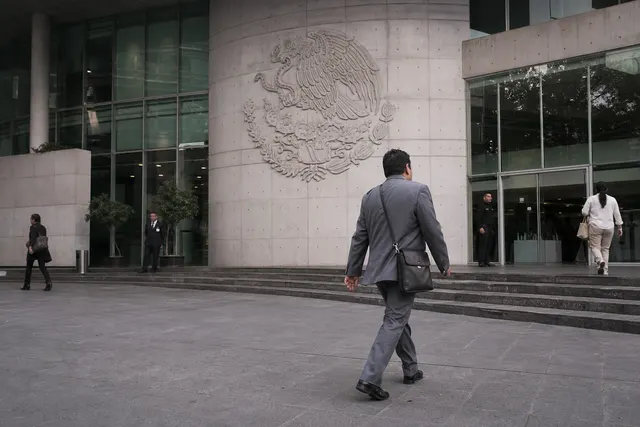
Mexico tightens review of foreign investment
The Senate received a bill that would subject purchases of Mexican cybersecurity and data firms to national security review.
Mexico’s executive branch sent the Senate a bill to amend the Foreign Investment Law and subject purchases in strategic sectors, including cybersecurity, data management, artificial intelligence and semiconductors, to national security scrutiny. The proposal would require prior approval for some transactions, add Defense, Navy and Security officials to the National Foreign Investment Commission, and establish fines for noncompliance.
Mexico’s federal executive branch has sent the Senate a bill to amend the Foreign Investment Law and create a new Sixth Bis Title on national security in foreign investment. The proposal would subject acquisitions of Mexican companies in strategic sectors to closer review, including cybersecurity, data management and storage, artificial intelligence, semiconductors, and physical or virtual infrastructure.
What changes for foreign investment?
The bill would require approval from the National Foreign Investment Commission when foreign investment seeks to exceed 49% of the share capital in Mexican companies involved in activities sensitive to national security. Those activities include critical technologies, strategic infrastructure, access to sensitive information, and the supply of essential inputs.
Cuatrecasas reported that the draft adds a new national security review chapter and replaces presumed approval with explicit approval. That raises the level of upfront compliance for investors. Mexico Business News also said the covered activities include data storage and processing, cybersecurity, robotics, quantum technologies and biotechnology.
What penalties does the proposal include?
The reform sets fines of between 5,000 and 200,000 times the daily value of the UMA for Mexican companies that transfer shares to foreign investors without prior authorization or despite a denial, when the transaction involves activities sensitive to national security.
Mexico Business News said the penalties can reach 200,000 times the UMA for violations in transactions subject to authorization. The same coverage said the framework also applies to share transfers tied to cybersecurity and data storage.
Who would have a voice on the commission?
Infobae, citing EFE, reported that the proposal adds Defense, Navy, and Security and Citizen Protection with voice and vote on the National Foreign Investment Commission. Senate President Laura Itzel Castillo confirmed receipt of the bill and said it seeks to give the CNIE new powers to provide greater legal certainty for foreign investment.
The same report added that the commission could require a favorable resolution when the company has assets above an amount that the CNIE itself will define, in addition to the condition that foreign capital exceeds 49%. Cuatrecasas also said the reform eliminates presumed approval for transactions that need authorization.
What other government reforms affect data and platforms?
The federal government is preparing a package of reforms that includes changes to the Federal Penal Code and the Federal Law for the Protection of Industrial Property to detect and pursue violations committed through digital platforms, especially the online sale of counterfeit products. IDC Online said the goal is to strengthen enforcement in e-commerce and online services subject to criminal and industrial property rules.
At the same time, Claudia Sheinbaum sent Congress a proposal to create a Single Identity Platform based on the CURP, which will include photos and fingerprints, according to legal adviser Ernestina Godoy. Urrutia Comunica said the plan is presented as a tool to strengthen the search for missing persons and would mean centralized processing of sensitive personal data.
Mexperience added that the rollout also envisions iris scanning and would require special enrollment modules or centers with support from local RENAPO offices and the Civil Registry. Regulatory changes are also moving ahead in Mexico City and the states. Morena in the Mexico City Congress reported amendments to the Personal Data Protection Law and the Transparency Law, while Chiapas and the State of Mexico published initiatives and new laws on transparency and personal data.
Sources
- Trabajo Legislativo - H. Congreso del Estado de Chiapasweb.congresochiapas.gob.mx· H. Congreso del Estado de Chiapas
- Some notes on the Initiative to reform the Foreign Investment Law in Mexicocuatrecasas.com· Cuatrecasas
- TEXTO ÍNTEGRO: MÉXICO alista REFORMA para endurecer el control sobre inversiones extranjeraspuntoporpunto.com· Punto por Punto
- Mexico Moves to Screen Foreign Investment for National Securitymexicobusiness.news· Mexico Business News
- México plantea revisar por seguridad nacional inversión extranjera en áreas estratégicasinfobae.com· Infobae
- Claudia Sheinbaum's 2nd Government Report, New Screening Lawmexicobusiness.news· Mexico Business News
- FAQs: What is Mexico's (Bio) CURP, and What is it Used For?mexperience.com· Mexperience
- Sheinbaum prepara paquete de reformas para el Congreso: ¿En qué consisten?idconline.mx· IDC Online
- Trabajo legislativo / iniciativa del gobernador sobre transparencia y datos personalescongresochiapas.gob.mx· H. Congreso del Estado de Chiapas
- Nueva Curp archivosurrutiacomunica.com· Urrutia Comunica
- Fortalece Congreso la transparencia y rendición de cuentas en Edomexestadodemexico.heraldodemexico.com.mx· Heraldo de México
- Morena en CDMX presenta avances en materia legislativaheraldodemexico.com.mx· El Heraldo de México
- Claudia Sheinbaum destaca aprobación de 27 reformas en lo que va de su sexenioradiosonora.com.mx· Radio Sonora