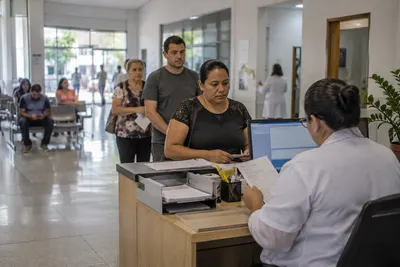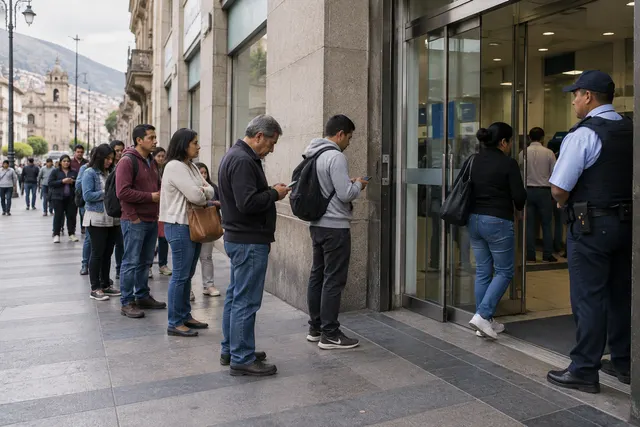
Chile reports $98 million in digital fraud
Digital payment fraud at Chilean banks reached $98 million in the first half of 2026.
A report attributed to the Central Bank of Chile put the amount involved in complaints over digital payment fraud at banks at $98 million in the first half of 2026. The figure adds to regional warnings about mobile malware, phishing and AI-assisted impersonation.
Update October 28, 2026: G5 Noticias reported that, at Chilean banks alone, the amounts involved in complaints over digital payment fraud reached $98 million in the first half of 2026, according to a report attributed to the Central Bank. The note also continues to include the regional overview on mobile malware, phishing and AI-assisted impersonation.
A report attributed to Zimperium says 21 mobile malware families are targeting 68 banking and fintech apps across 12 Latin American countries. The same material describes accessibility abuse, screen overlays, OTP interception and device takeover as tactics used to steal credentials and enable fraudulent transfers.
What do the regional reports show about digital fraud?
Available data points to a mix of phishing, fraudulent calls, mobile malware and AI-assisted identity impersonation. La República reported, citing TransUnion's latest fraud trends report, that 41% of adults surveyed in Latin America said they had been the target of some digital fraud attempt, with phishing identified as the main scheme. It also said 27% reported receiving a call aimed at extracting information.
On another front, Sovos said artificial intelligence expands identity fraud through deepfakes, synthetic identities and other forms of impersonation. The same article said CONDUSEF logged more than 35,000 claims for possible financial fraud between January and May 2026.
What tactics are attackers using?
The attacks described combine social engineering with technical manipulation of a victim's device or identity. The material attributed to Zimperium refers to accessibility abuse, screen overlays, OTP capture and device takeover to drain accounts or enable unauthorized transfers. Meanwhile, Marcelo Wong, national chief of cybercrime at Chile's Investigative Police, warned that AI makes phishing messages more convincing and allows identity spoofing during video calls through manipulated images, audio or video in real time.
Silent4Business, according to articles reproduced by Mexican media, described three AI impersonation methods in financial services: synthetic identities used to pose as customers, manipulated voice or video to mimic executives, and fake websites, domains or profiles that appear to belong to financial institutions. The firm also recommended liveness checks, behavioral analysis and phishing-resistant multifactor authentication, along with verifying sensitive requests through separate channels.
What do the data from Mexico and Chile show?
In Mexico, the cited reports point to heavier pressure on the financial system and on users. Código Espagueti reported, based on the Norton LATAM Cybersecurity Landscape Study 2026, that 83% of adults surveyed in Mexico experienced some cyber threat in the previous 12 months and that 20% always enabled two-factor authentication. Infobae México, citing Facephi Observatory, said that in 2025 Mexico's financial system recorded more than 108,000 complaints over digital fraud and losses above 11.3 billion pesos.
The same outlet added, citing Entrust's Identity Fraud Report, that deepfakes accounted for one in five biometric fraud attempts. Verafin, for its part, said that in 2025 there were about 8.1 million fraud cases in Mexico, of which 4.6 million would have been bank fraud and 3.6 million consumer fraud, although the result does not clearly identify the primary study or its methodology.
In Chile, the debate centered on how to stop fraud without making the customer experience harder. MadBoxPC linked identity fraud prevention in banking and insurance to the reinforced customer authentication required under Rule 538 from the Financial Market Commission, and described the combined use of facial biometrics, NFC document reading and OCR as verification mechanisms proposed by the company cited.
G5 Noticias added that the amounts involved in complaints over digital payment fraud, considering banks only, reached $98 million in the first half of 2026, according to a report attributed to the Central Bank of Chile.
Sources
- Banca y seguros en Chile: cómo prevenir el fraude de identidad sin complicar la experiencia del clientemadboxpc.com· MadBoxPC
- El nuevo fraude de identidad en servicios financierossovos.com· Sovos SSA
- Información sobre prevención del fraude de identidad y autenticación en Chilemadboxpc.com· MadBoxPC
- Mobile banking malware in LATAM is scaling through AI-assisted fraudnhimg.org· NHIMG
- Financial Fraud Drives the Majority of Crime in Mexicoverafin.com· Verafin
- Deepfakes amenazan la confianza en la banca: Silent4Business identifica 3 formas de suplantaciónexcelsior.com.mx· Excélsior
- Entrevista a Carlos Valencia, presidente regional de TransUnion para América Latinalarepublica.co· La República
- PDI advierte que la IA perfecciona las estafas y permite suplantar personas en videollamadaselperiodista.cl· ElPeriodista.cl
- El 83% de los mexicanos sufre amenazas cibernéticas por no usar contraseñas segurascodigoespagueti.com· Código Espagueti
- Mobile Fraud in 2026: Malware is Actively Targeting Mobile Banking Apps in LATAMzimperium.com· Zimperium
- Fraudes con inteligencia artificial superan los 20 mil millones de pesos en Méxicoinfobae.com· Infobae México
- Chile acelera el fin del efectivo: el reto de reforzar la seguridad digitalg5noticias.cl· G5 Noticias
- 1 de cada 4 chilenos ya sufrió una estafa digitalmundoenlinea.cl· Mundo en Línea
- ¡Cuidado! Así utilizan la inteligencia artificial para suplantar a clientes y directivos de bancosheraldodemexico.com.mx· El Heraldo de México