Chile approves anti-deepfake bill, weighs data delay
Chile’s lower house advanced an anti-deepfake bill, while the government considers delaying the new data protection law by one year.
Chile’s lower house approved in general a bill regulating AI-generated content and punishing deepfakes, while the government is weighing a one-year delay to the new Personal Data Protection Law because the supervising agency is not fully operational.
Chile’s Chamber of Deputies approved in general a bill that regulates content generated with artificial intelligence and specifically penalizes deepfakes, then sent it back to the Future, Science, Technology, Knowledge and Innovation Committee for further review. At the same time, the government is studying a one-year delay to the new Personal Data Protection Law, which is set to take effect on Dec. 1, and Renovación Nacional introduced another measure to expand the use of IMSI Catchers in exceptional cases.
What did the Chamber approve on artificial intelligence?
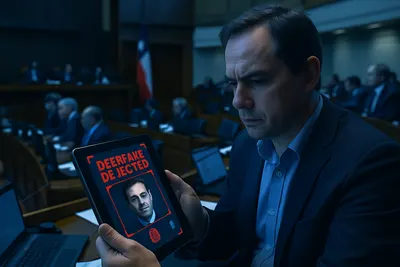
The Chamber of Deputies approved in general an initiative that creates obligations for individuals, companies and social media platforms when they use AI-generated content. The text was returned to committee and, according to The Standard CIO, the vote ended with 128 in favor, 2 against and 5 abstentions.
The bill creates the concept of digital integrity as a new right that protects a person’s image, body and voice as essential elements of identity, even after death. It also requires AI-generated content to be labeled, ordered removal of reported material within a maximum of 72 hours, and requires platforms to have a legal representative in Chile.
The proposal excludes private messaging. It also sets fines ranging from 5,000 to 10,000 UTM, which The Standard CIO estimated at roughly $358 million to $716 million, with oversight to be handled by the future Personal Data Protection Agency.
What is happening with the Personal Data Protection Law?
The government is considering a bill to postpone by one year the start date of the new Personal Data Protection Law, which Congress passed in August 2024 and was due to take effect on Dec. 1. According to Diario y Radio Universidad de Chile and Radio Bío-Bío, the delay would give authorities more time before the law becomes enforceable, amid the lack of a fully operational oversight agency.
Radio Cooperativa reported criticism from the former head of the Transparency Council, who said such a delay should not exceed six months and should only be used to set up the Data Protection Agency and complete the state’s preparatory measures. Mundo en Línea, for its part, said companies would still need to review databases, consent processes and incident response mechanisms, because the law’s obligations will remain unchanged once it enters into force.
What is RN proposing with IMSI Catchers?
Renovación Nacional’s caucus introduced a bill to expand the use of IMSI Catcher devices in exceptional investigations by adding them to the special investigative measures in the Criminal Procedure Code. The proposal requires justification for why other, less intrusive measures are not enough, identification of the people or devices involved, and an explanation of what types of communications would be intercepted.
According to La Tercera and Radio Agricultura, the text places these technologies under judicial oversight and explicit safeguards, and exceptionally opens the door to capturing the content of communications as well as metadata, under a stricter regime of authorization, justification, duration and oversight. Radio Cooperativa added that there is resistance within the governing coalition to withdrawing from Congress the security bill that includes phone interceptions, and that after reviewing the text with constitutional experts, amendments are being considered to limit timeframes, strengthen congressional involvement and require judicial authorization for interceptions.
Together, the three debates are shaping Chile’s technology policy agenda, with an anti-deepfake law already approved in general, a possible delay to the personal data law and a new discussion over interception tools in criminal investigations.
Sources
- Ley de Protección de Datos: Gobierno busca postergar su entrada en vigenciaradio.uchile.cl· Diario y Radio Universidad de Chile
- Expresidente del CPLT criticó eventual postergación de un año para la Ley de Protección de Datoscooperativa.cl· Radio Cooperativa
- Privacidad diferencial: Ley N° 21.719rvsolucioneslegales.cl· R&V Soluciones Legales
- Ley 21.719: datos personales en funerariassfun.co· SFUN
- Gobierno estudia aplazar un año la nueva Ley de Protección de Datos Personales por falta de agencia fiscalizadorabiobiochile.cl· Radio Bío-Bío
- Bancada RN presenta proyecto para ampliar uso de IMSI Catcher para interceptar comunicaciones en casos excepcionaleslatercera.com· La Tercera
- El reglamento de la Ley 21.719: qué regula y en qué estado estáalayiatrust.com· Alayia Trust
- Nueva Ley de Protección de Datos obligará a las empresas a replantear cómo gestionan la información de personasmundoenlinea.cl· Mundo en Línea
- 72 horas para eliminar una mentira con IA: Conoce qué país lidera la ley antideepfakes en America Latinaestamosenlinea.com· Estamos en Línea / síntesis de prensa tecnológica
- Ley de Protección de Datos Personales al congelador: gobierno de Kast escucha a gremio de grandes empresarioseldesconcierto.cl· El Desconcierto
- "No a la cocina": Oficialismo rechaza retirar del Congreso criticado proyecto de seguridadcooperativa.cl· Radio Cooperativa
- Ciberseguridad: aprueban Ley contra deepfakes en Chilethestandardcio.com· The Standard CIO
- Bancada RN presenta proyecto para fortalecer la persecución del crimen organizado mediante el uso de tecnología IMSI Catcherradioagricultura.cl· Radio Agricultura