Huancavelica court convicts Yape fraud case
A Peruvian court convicted Ángel Antony Aparco Paitán for using AI to fake a Yape receipt in Huancavelica. The sentence was suspended.
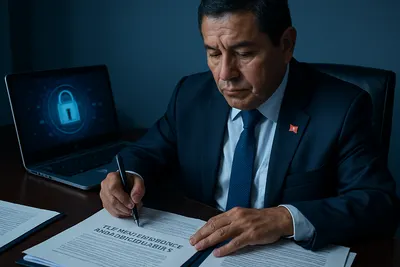
A Peruvian court convicted Ángel Antony Aparco Paitán of aggravated fraud after he used artificial intelligence to generate a fake Yape receipt and simulate a S/111 payment at the La Huantina liquor store in Huancavelica. He received a suspended sentence of three years, eight months and 26 days in prison.
Update November 9, 2026: The case involved a simulated S/111 payment at the La Huantina liquor store, and in addition to the conviction reported by Correo, Infobae and Perú21, a civil repair of S/4,500 was also reported.
The judiciary convicted Ángel Antony Aparco Paitán in Huancavelica of aggravated fraud after he used artificial intelligence to generate a fake Yape receipt and simulate payment of S/111 for products at the La Huantina liquor store. According to Infobae and Perú21, he received a suspended prison sentence of three years, eight months and 26 days. A civil repair payment of S/4,500 was also set.
What did the ruling decide?
The sentence imposed a suspended term and kept the financial obligations tied to the case in place. According to Perú21, civil damages were set at S/4,500, while Infobae reported a suspended prison sentence of three years, eight months and 26 days. The available coverage does not add any other procedural details or mention a response from the defense.
What does the case add to the discussion on AI use?
The reporting attributes the fake Yape payment to artificial intelligence tools, turning the forgery into an in-person fraud scheme. In this case, the confirmed information adds that the fake receipt was used to simulate a transfer through BCP/Yape and that the amount involved was S/111. There are no technical details on the method used or a forensic description of the file or image used to deceive the business.
Is there a second reported front on AI-enabled fraud?
La República reported, in a separate piece and without confirming a specific incident in Peru, that fake job profiles generated or assisted by AI are being used to deceive workers and help facilitate attacks against companies. That report does not identify a verified victim or author, so it cannot be merged with the Huancavelica case as if it were the same event.
The difference between the two reports matters. In Huancavelica, there is a reported court conviction for aggravated fraud and a civil repair amount already set. In La República's piece, by contrast, only a tactic attributed to unverified actors is described, without a closed local case or a specific individual charge.
Sources
- Condenan a más de tres años de prisión a hombre que usó IA para falsificar un pago de Yape en Huancavelicainfobae.com· Infobae Perú
- Huancavelica: joven es condenado por utilizar inteligencia artificial para falsificar pagos por Yapediariocorreo.pe· Diario Correo
- Hackers usan falsas postulaciones con IA para robar datos de empresas: ¿cómo evitarlo?especial.larepublica.pe· La República
- Huancavelica: joven es condenado por utilizar inteligencia artificial para falsificar pagos por Yapediariocorreo.pe· Diario Correo
- Huancavelica: condenan a joven que usó inteligencia artificial para falsificar pagos por Yapeperu21.pe· Perú21Unverified URL
- Dictan más de 3 años de cárcel a sujeto que usó IA para falsificar un pago de Yape en Huancavelicaperuinforma.com· PerúInforma